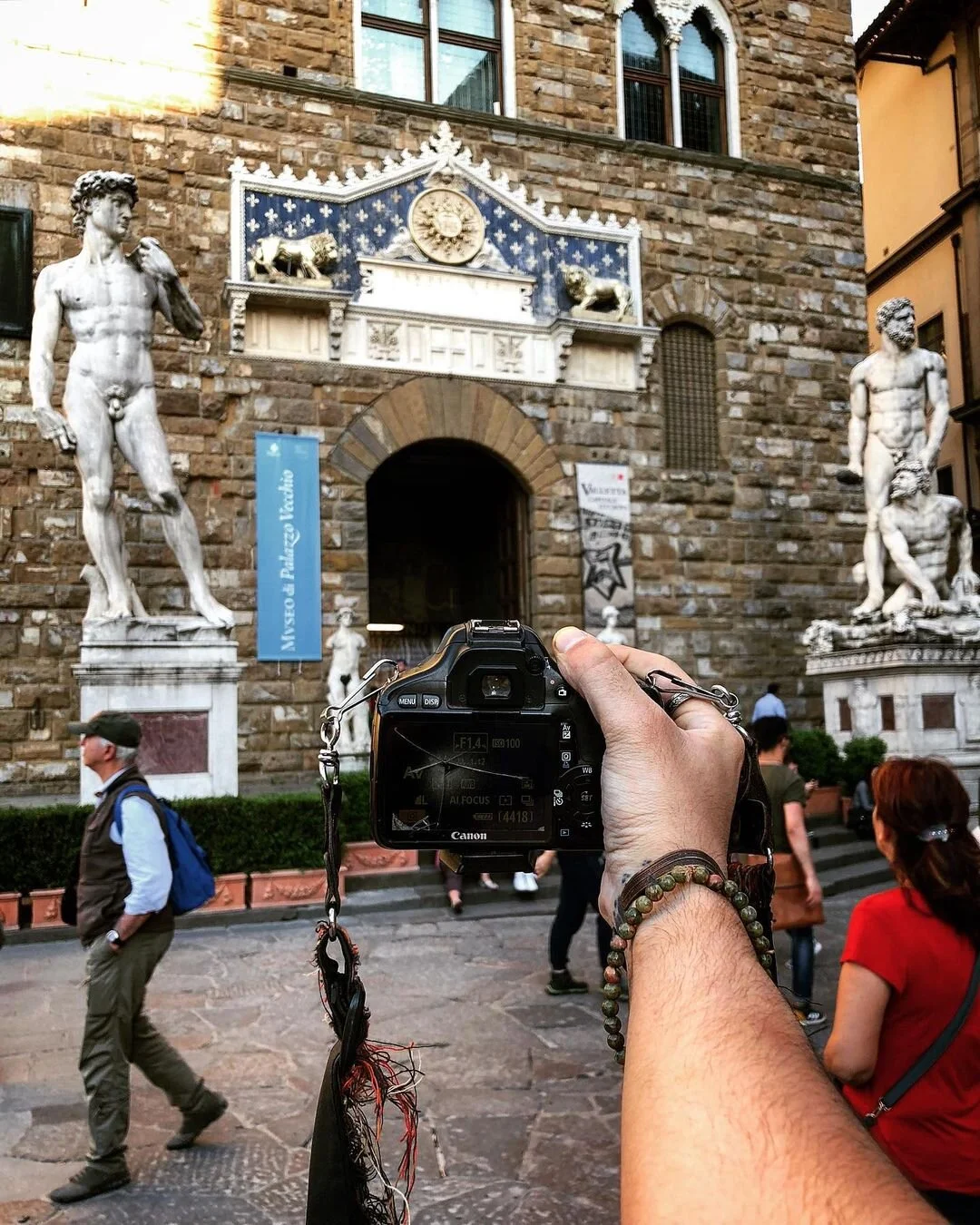
PALAZZOVECCHIO:
Built at the turn between the 13th and 14th centuries as the seat of the Priors, the oldest part of Palazzo Vecchio was originally designed by Arnolfo di Cambio. Various statues are lined up in front of the entrance, including a copy of Michelangelo's David, that replaced the original in 1873, and the group of Hercules and Cacus by Bandinelli. During an anti-Medici rebellion on April 26, 1527, rioters occupied the building while soldiers battered the doors. The occupiers threw furniture off the parapets to repel soldiers on the ground and a bench tumbled down and struck the left arm of the statue of Michelangelo’s David, breaking it off in three pieces. While most modern accounts say a new arm was carved and reattached to the statue, Giorgio Vasari, 16th Century biographer of the artists, claims that the pieces remained on the ground for days while fighting continued in Piazza della Signoria until two boys worked their way through the brawling soldiers to gather up the pieces, and were eventually reattached to the sculpture with copper nails.
Whatever it is, the way you tell your story online can make all the difference.
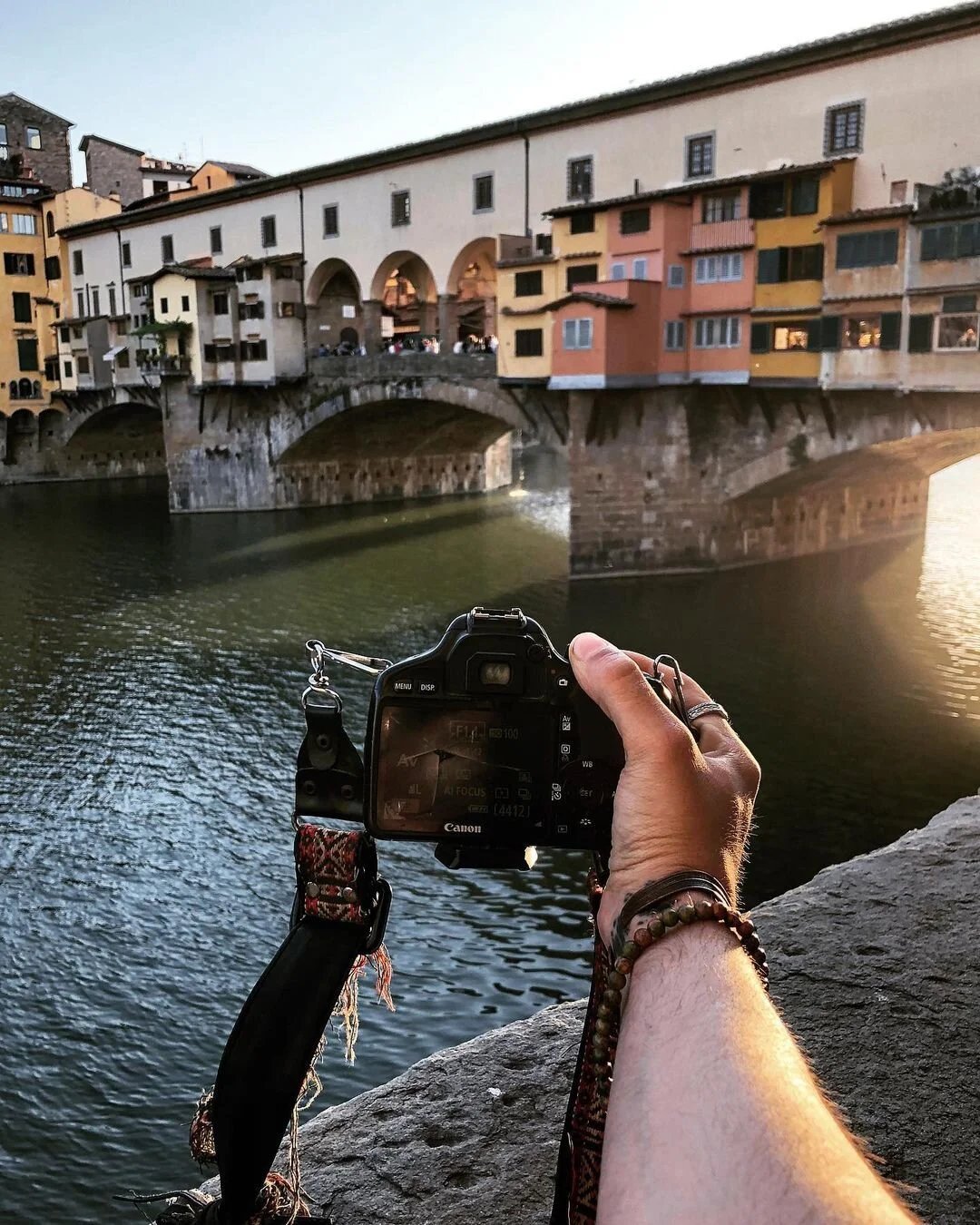
PONTEVECCHIO:
Ponte Vecchio was initially built in Roman times but was destroyed several times by the floods of the Arno river. In 1345 it became the first bridge in history built using lowered arches, an innovative solution that allowed to have a smaller number of spans with a larger width, allowing the debris brought by the floods to flow more easily. Initially home to popular shops, butchers and vegetable farmers, the bridge underwent a drastic change in 1565, when Cosimo I De'Medici commissioned the architect Giorgio Vassari to build the Vassari corridor, an elevated corridor with the aim of connecting the political center of the city with the private homes of the Medici family. After that all the butchers & emporiums were soon replaced by goldsmiths and jewelers by order of the Grand Duke of Tuscany Ferdinando I.
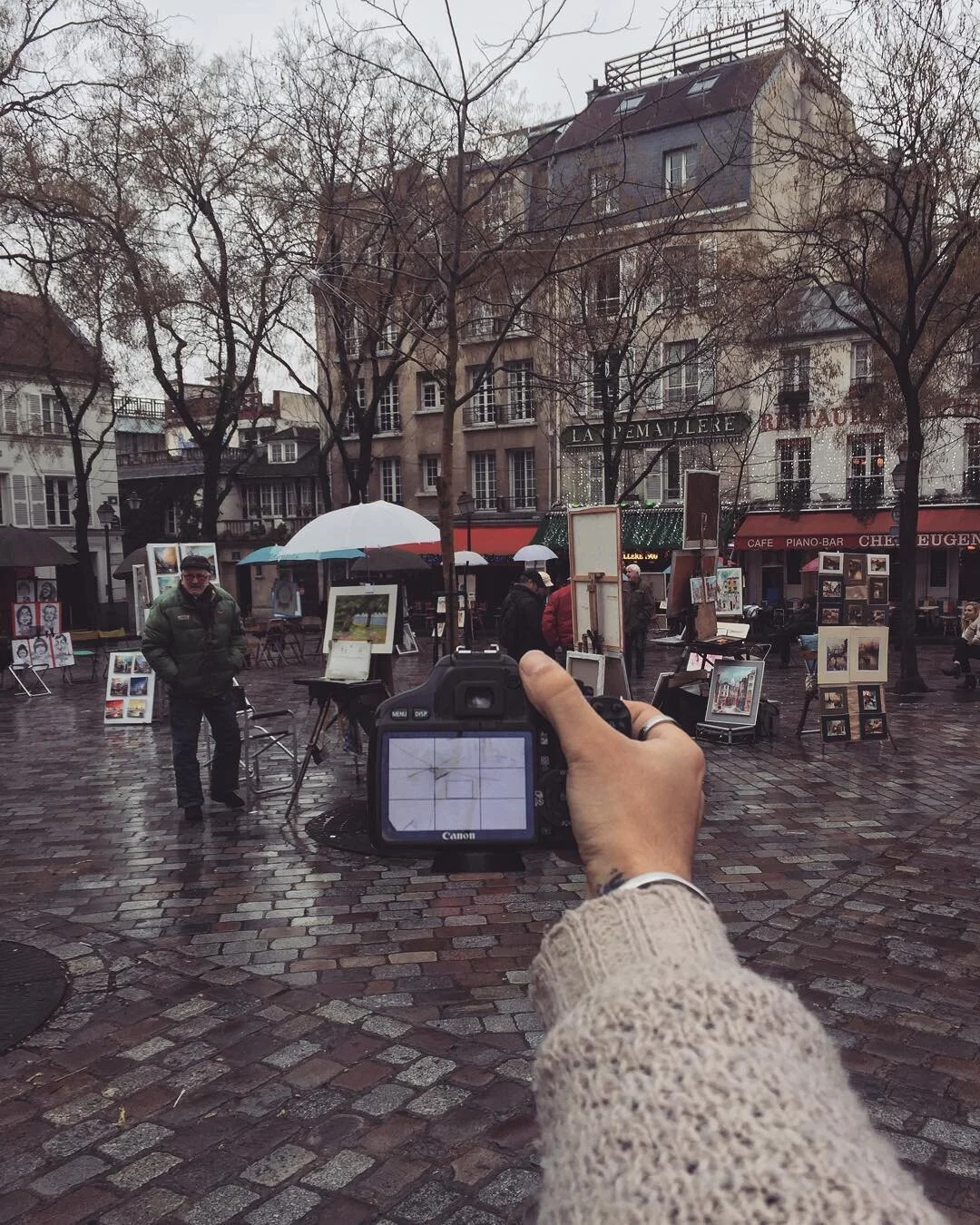
MONTMATREIN PARìS:
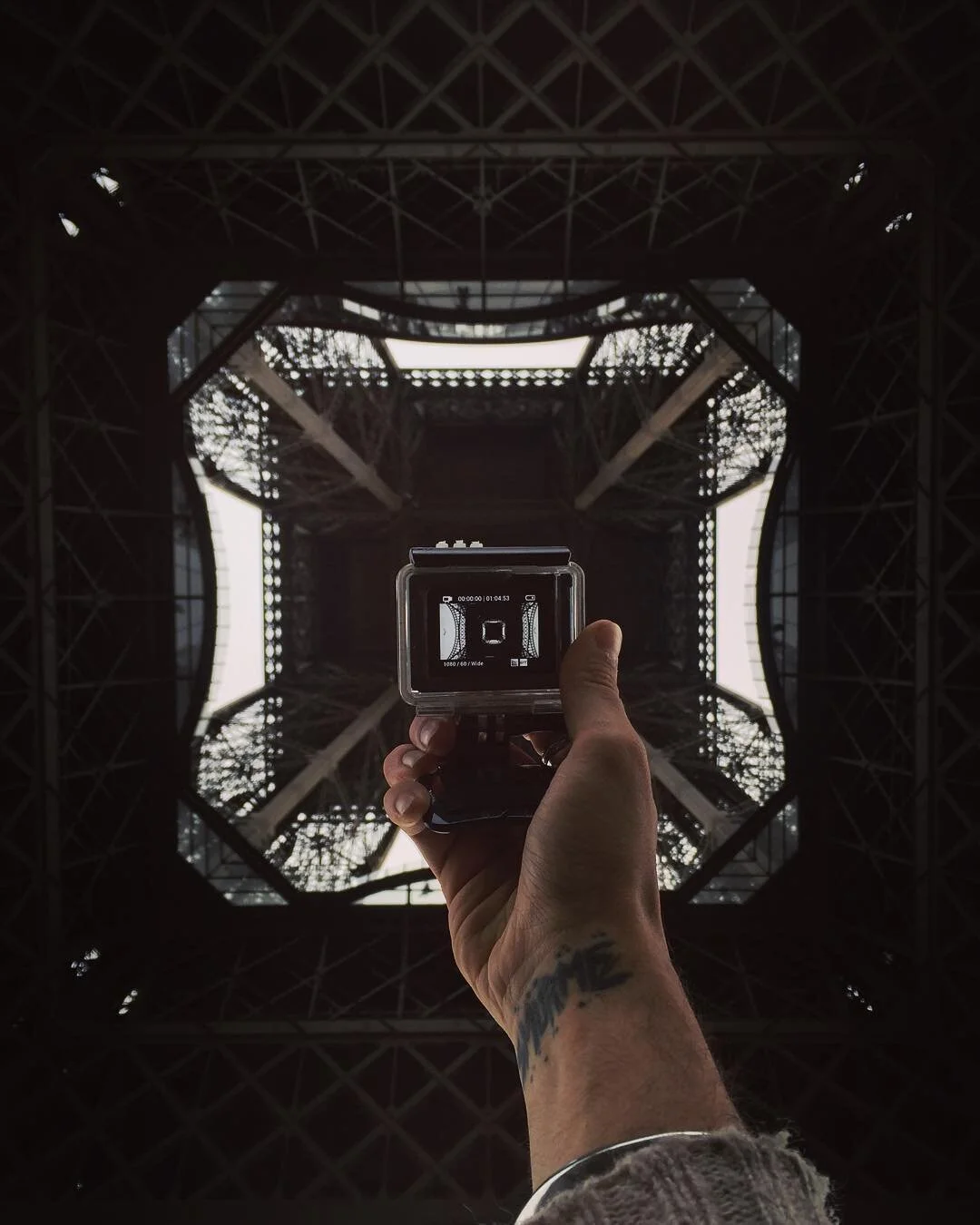
THE SYMBOL OFTHE CITY:
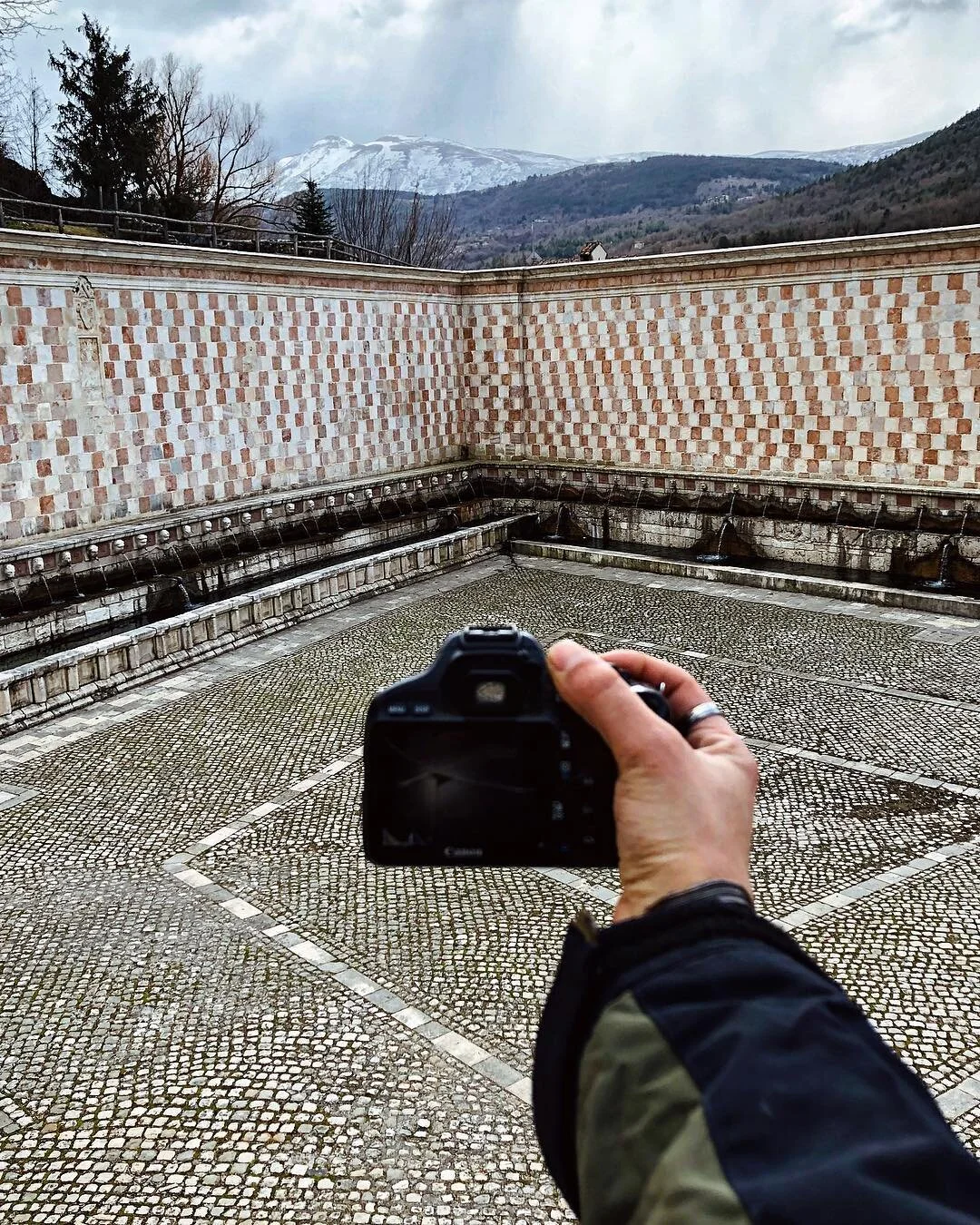
L’AQUILA:
Fontana Delle 99 Cannelle is a unique piece of architecture in the city of L’Aquila. Built in the 13th century, it is still surrounded in legends, and the original meaning of the 99 (actually 93) sculpted stone faces is still a mystery. Have you heard any stories about it yet?
TEST TEST.
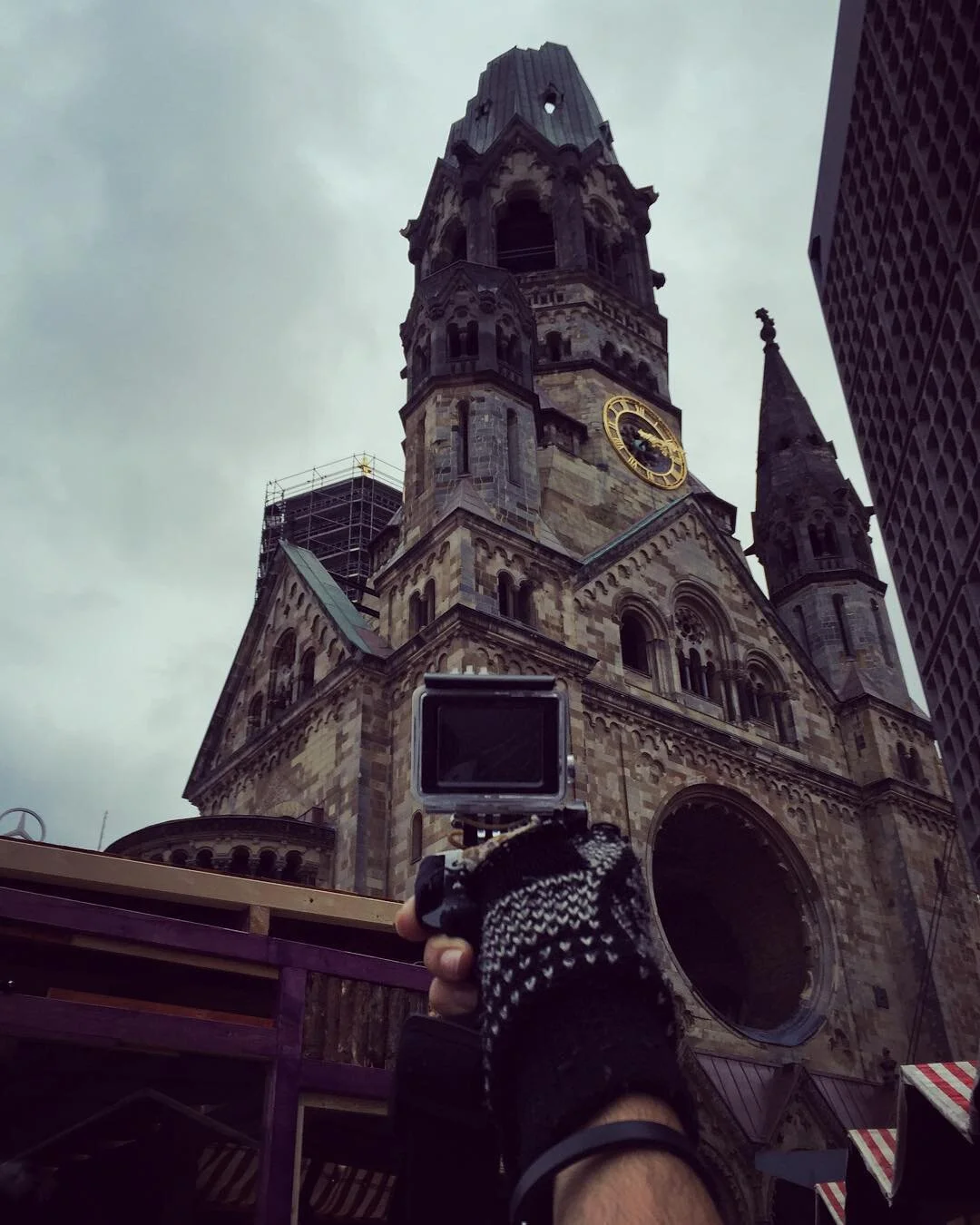
WHILE INBERLIN:
The Kaiser Wilhelm Memorial church was designed by Franz Schwechten and it was commissioned by the last German emperor and king of Prussia Keiser Wilhelm II. He built the church in honor of his grandfather Wilhelm I and the foundation stone was laid on March 22 1891, which was Wilhelm I's birthday
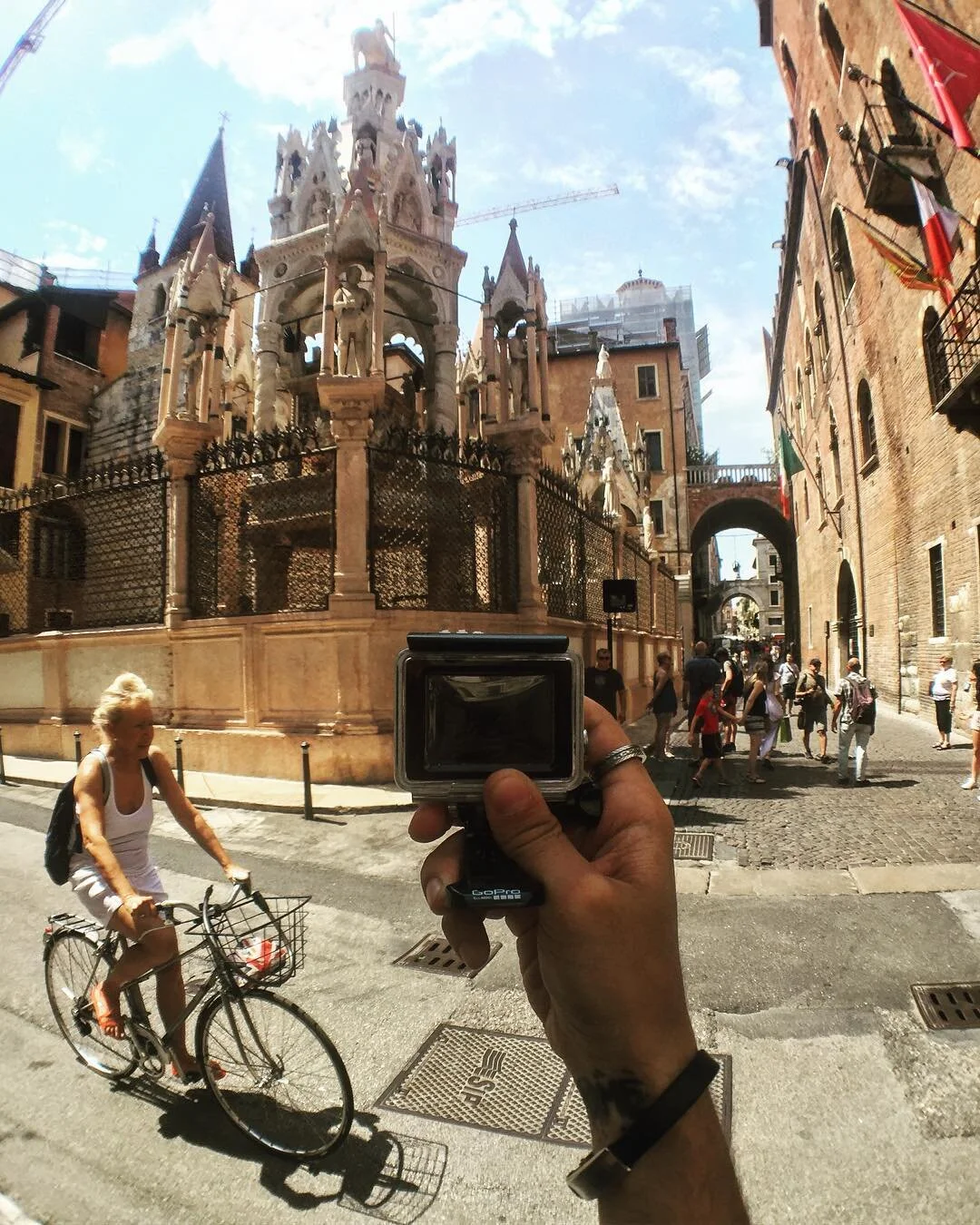
WALKING INVERONA:
Santa Maria Antica is a Roman Catholic church from 1185, rebuilt after the earthquake of 1117 that destroyed the original building that dated back to the 7th century, just at the end of the Lombard domination. Nowadays the only surviving remains of the original structure are some sections of the black & white mosaic floor.
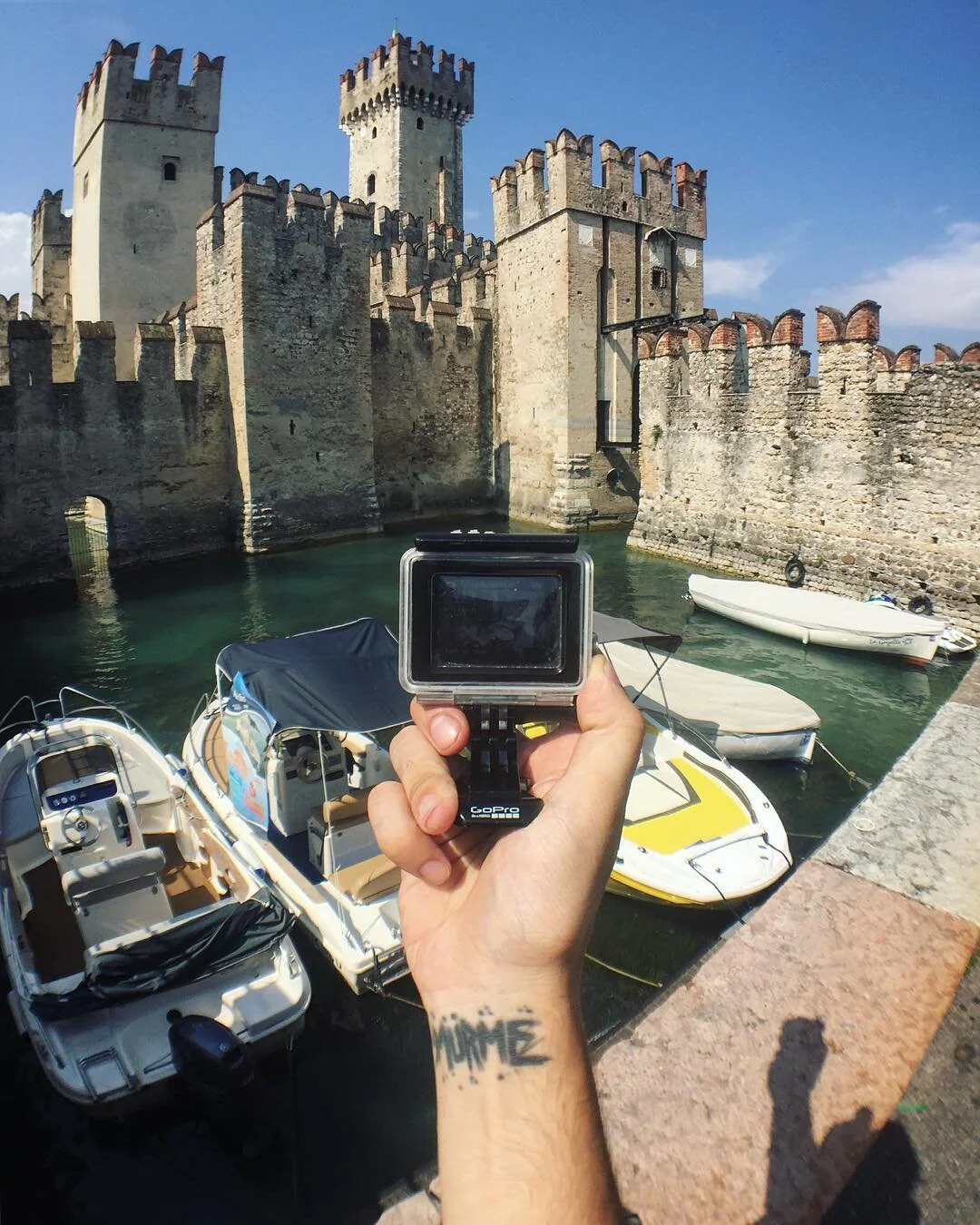
WALKING IN SIRMIONE:
Wondering around this lovely little town for the first time. I don't know much about this location, but after this couple of hours of exploration, I think i mastered the topography of it. Now let's find a bar where I can sit in order to make some research and figure out the history of this place. Welcome in Sirmione folks!
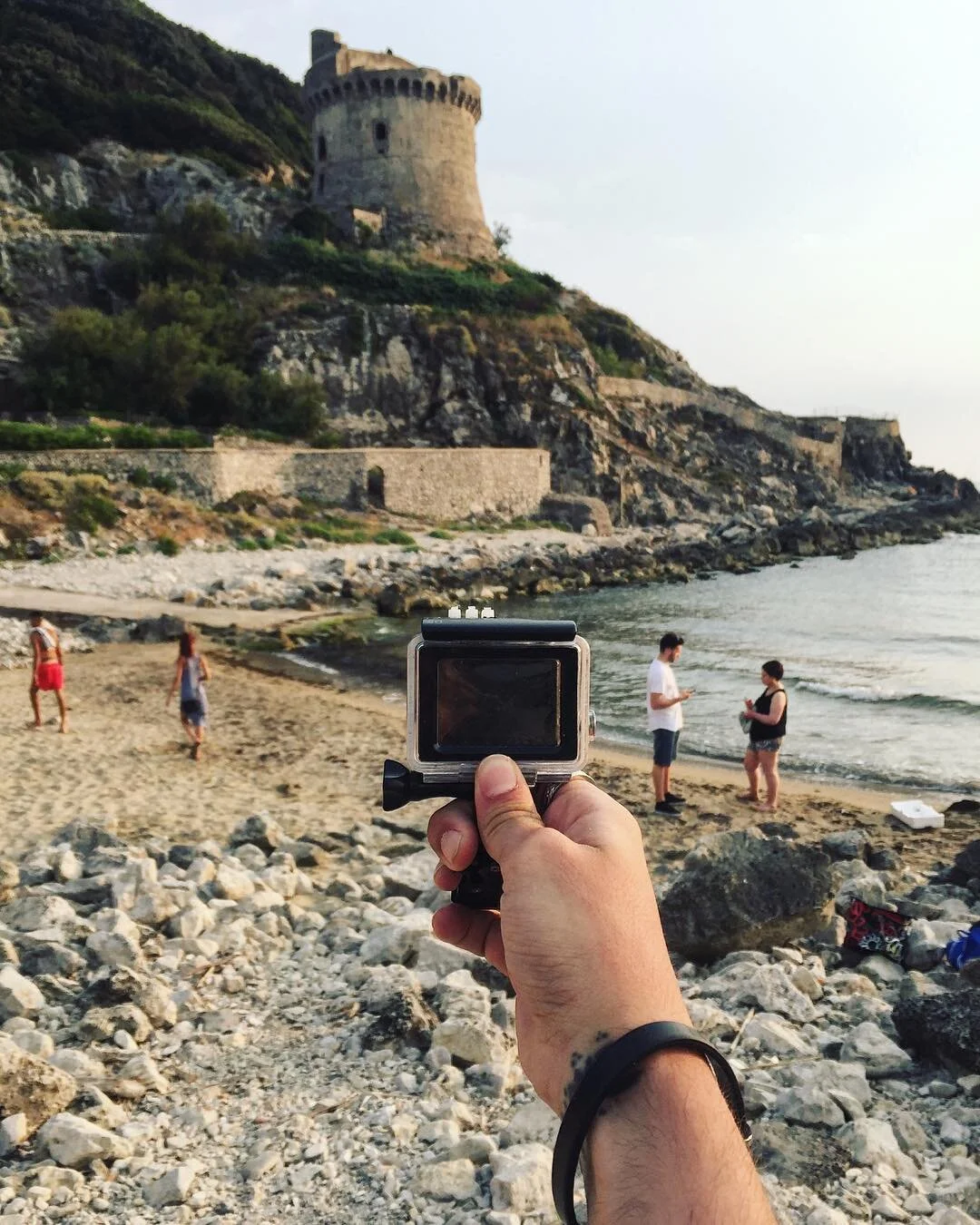
WHILE IN SABAUDIA:
Torre Paola was built in a very strategic point: overlooking the mouth of the emissary channel of lake Paola, the beach, the open sea, and the promontory behind it. Noticing any unusual things on the top of the tower? The rooftop is equipped with a concrete shield facing the side of the mountain in order to protect the soldiers, and their weapons, from eventual raids from the cliff. Which is exactly what happened years earlier during its construction with the first attack by the Saracens. Learn from your failures folks!
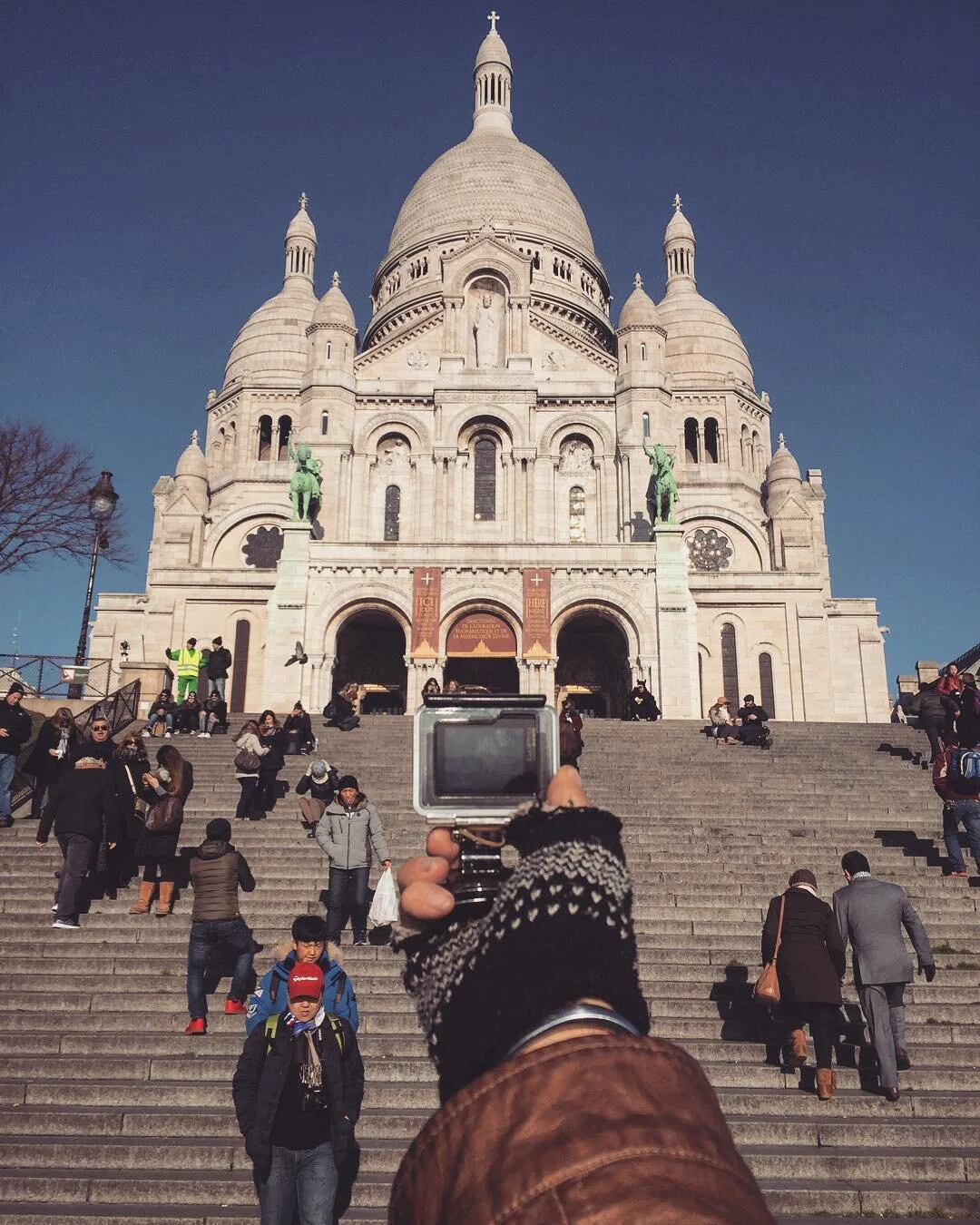
SACRE CUORE TEST.
BERLIN SIGHTSEEN:
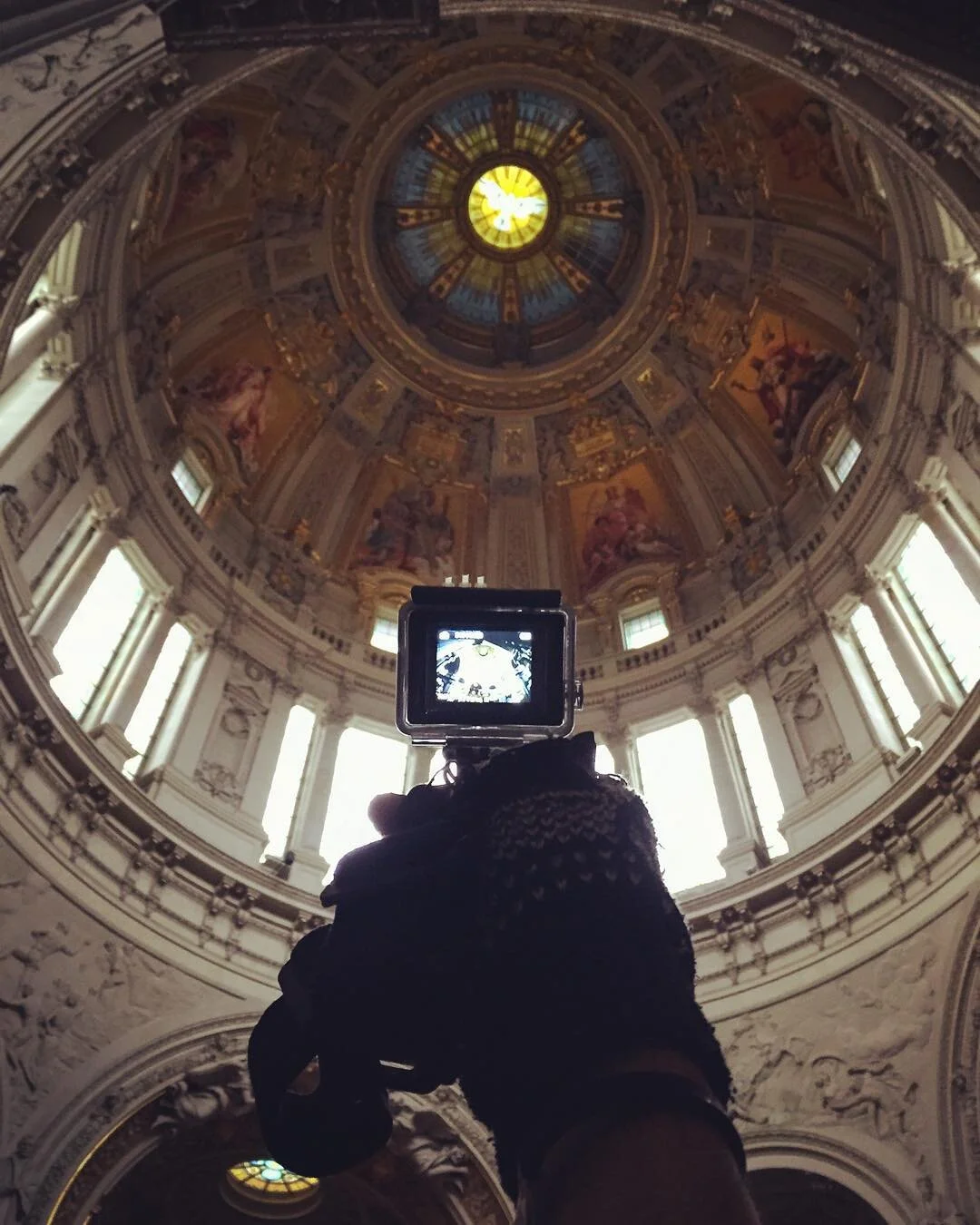
The Berlin Cathedral it's an amazing place to explore but has never been a cathedral in the actual sense of that term since it has never been a seat of a bishop.
NYC TEST .
ROMA TEST.
WALKING IN FIRENZE:
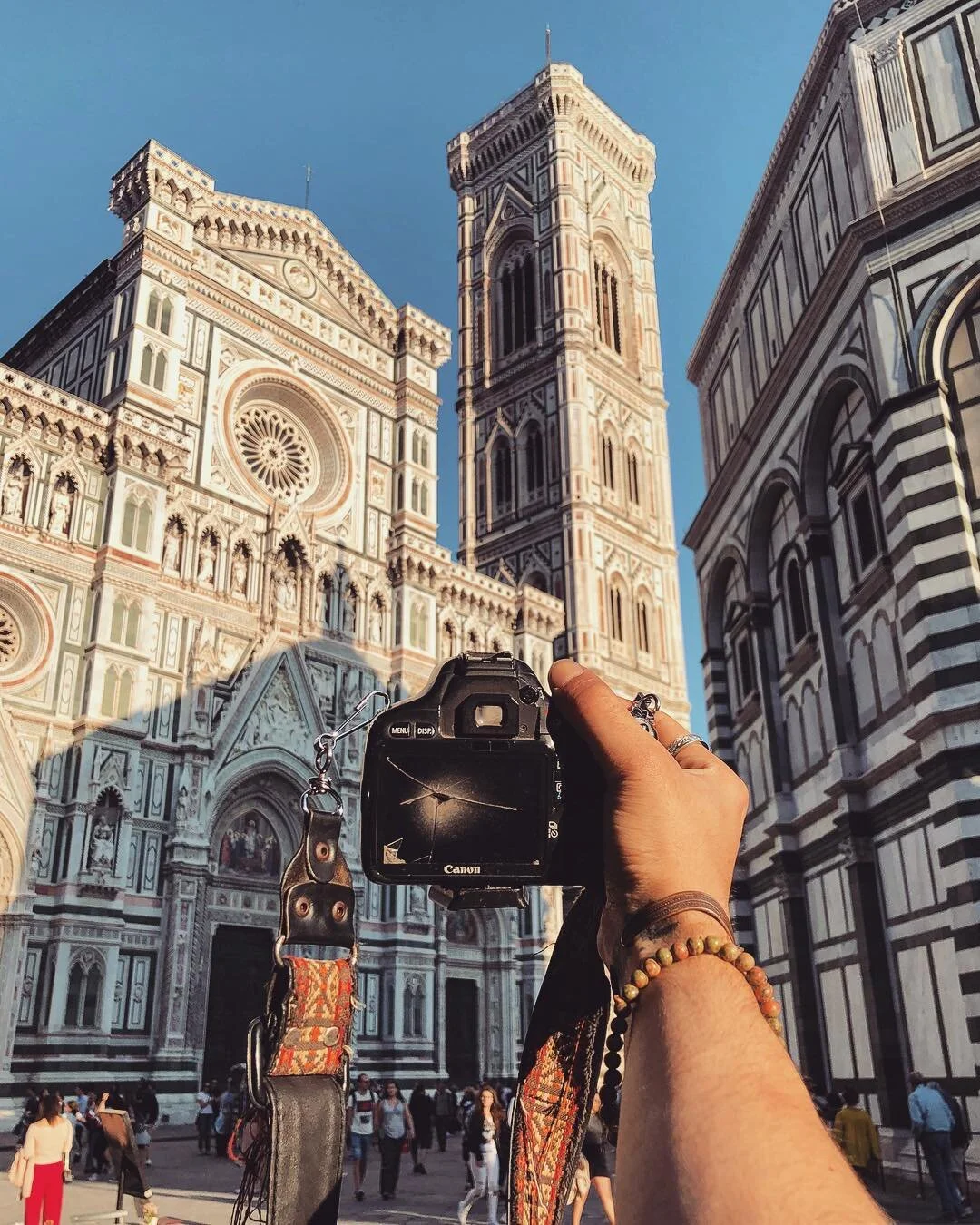
The feeling when you are in front of something, or someone, that makes you feel enchanted. Outstanding. Now let’s get ready to explore and learn more about Firenze, Pisa & Livorno.
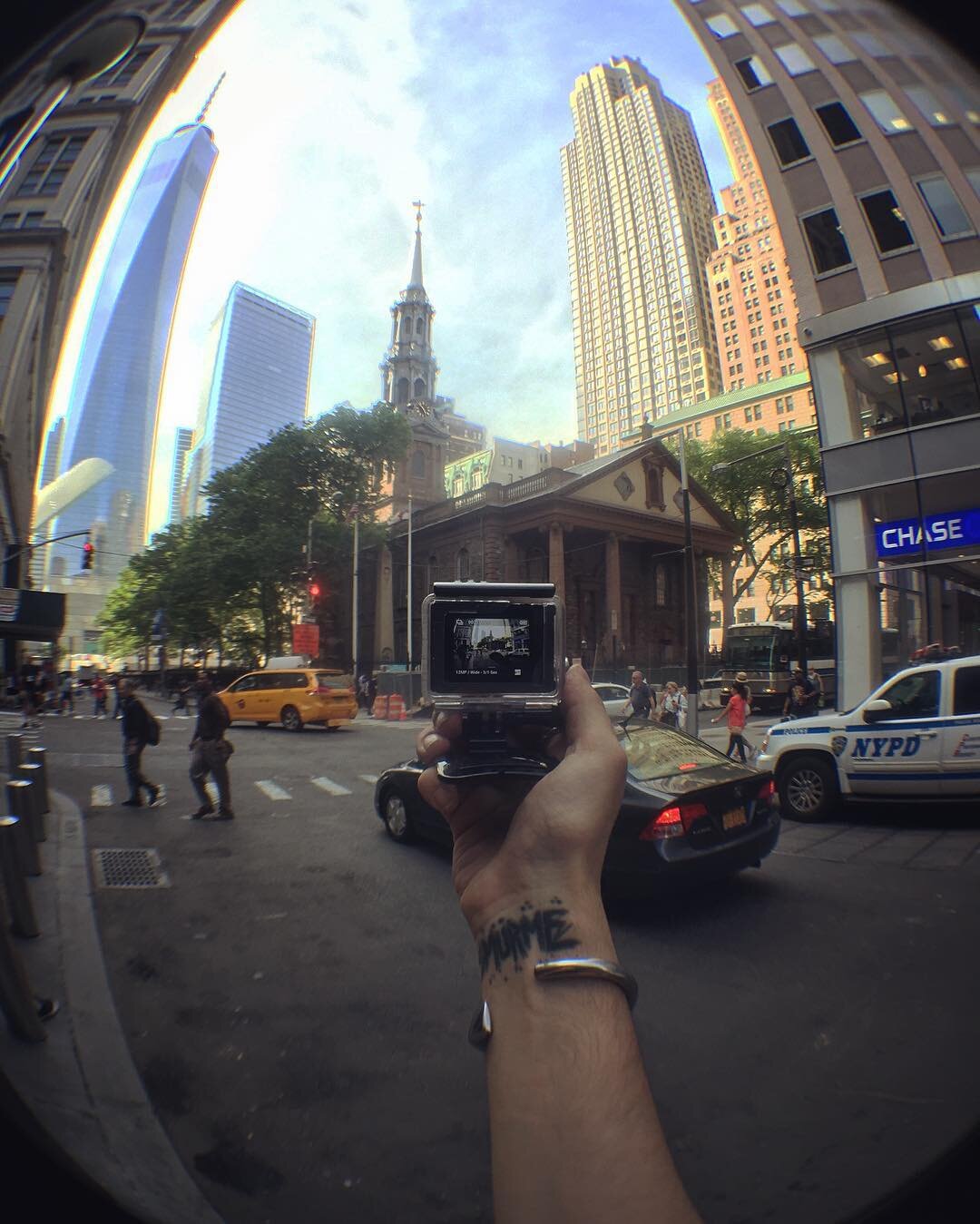
MANHATTAN HISTORY:
The St. Paul's Chapel was completed in 1766 and at that time it was the tallest building in New York City. The rear of the church faces the World Trade Center site, where you can now find the tallest building of the city, and surprisingly this place survived the collapse of the twin towers without even a broken window.
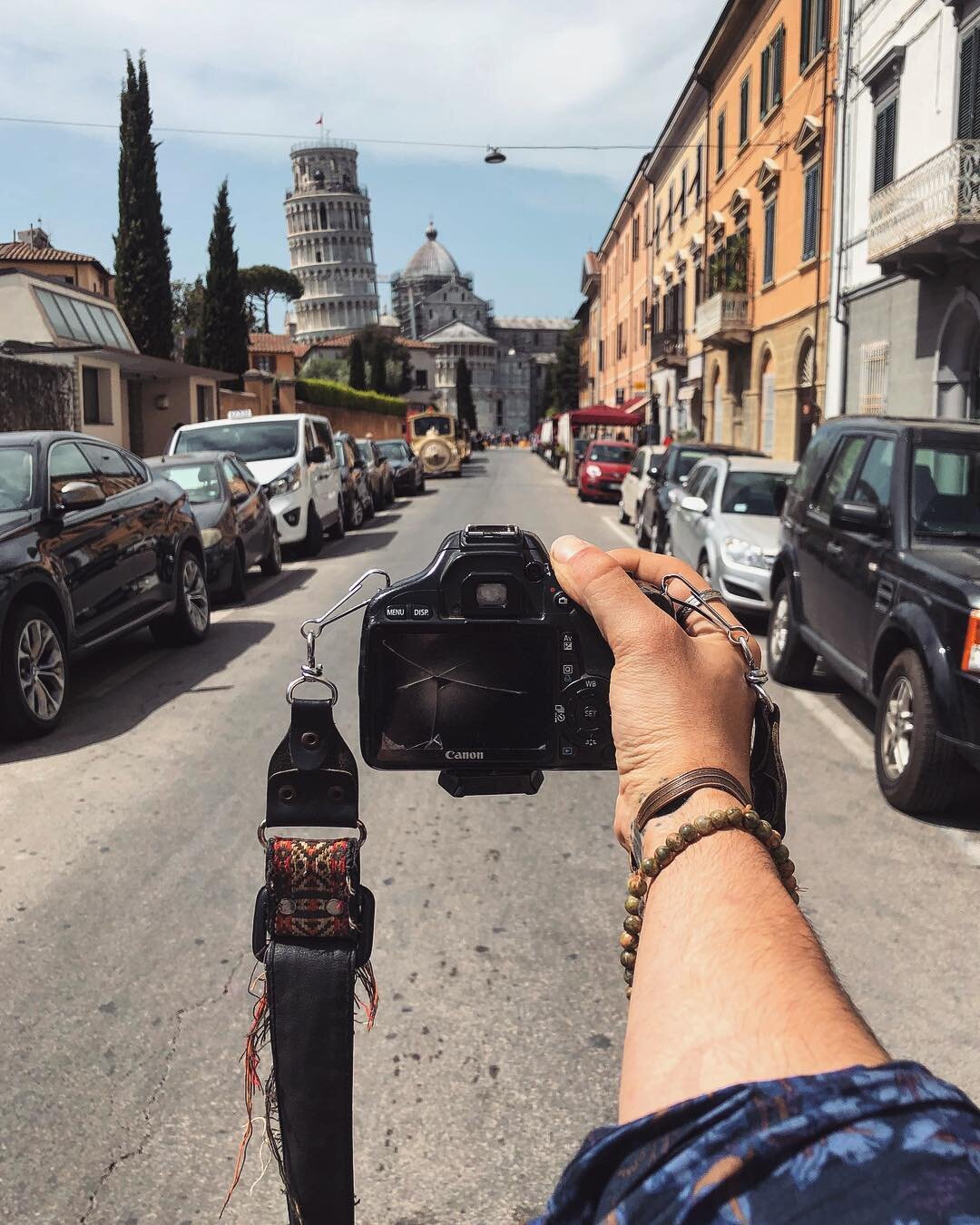
WALKING IN PISA:
Welcome in Pisa folks! This city hosts 91,100 souls (around 200.000 if we count the entire metropolitan area) on a total area of roughly 185 sq Km. This is my first time here and I only have a handful of hours, let’s go explore
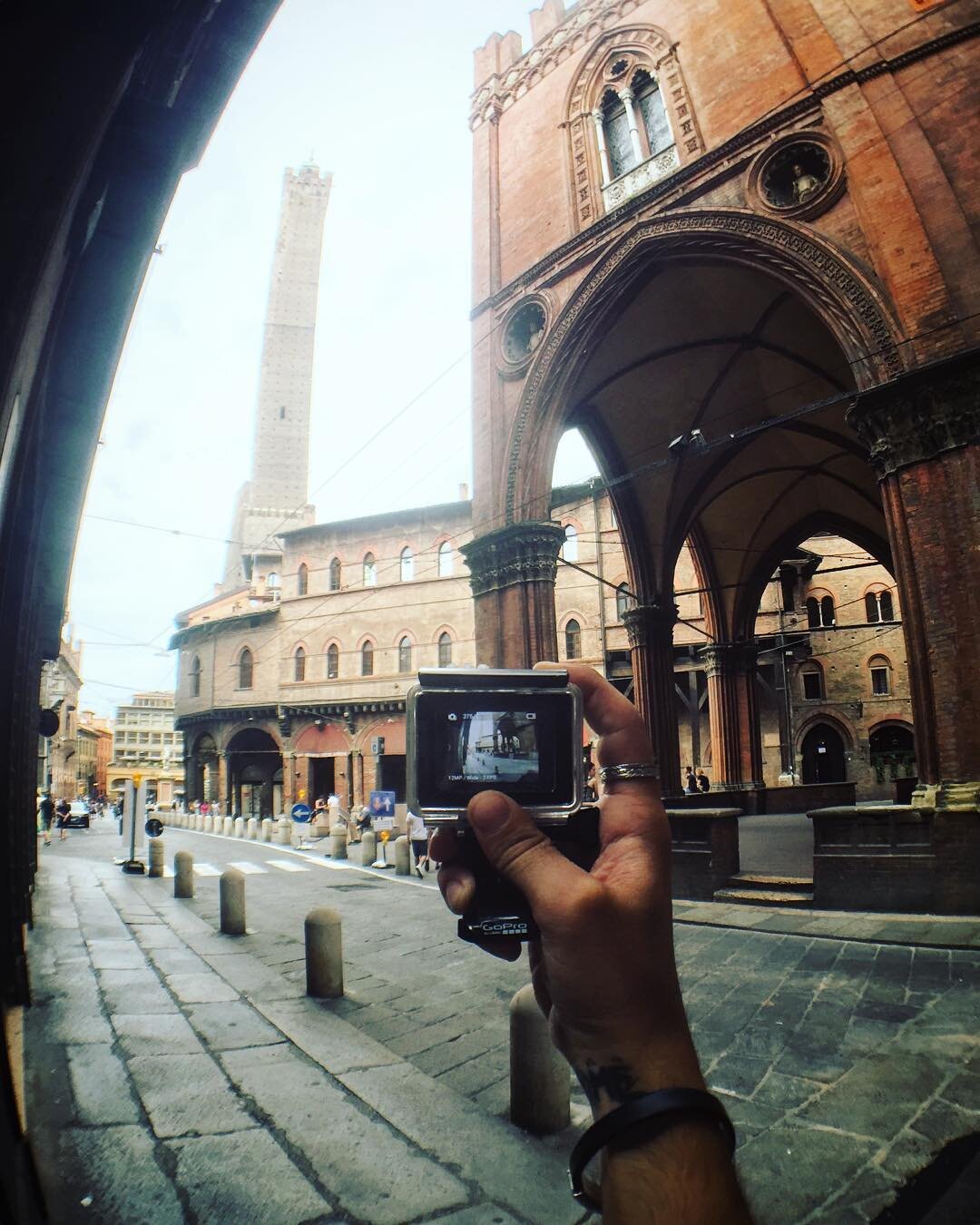
A MESMERISING CITY:
Bologna is the capital and the largest city of the Emilia-Romagna region in northern Italy. This incredible place hosts a population of 388.567 souls, but the entire metropolitan area is just a little over one million units, making it an important cultural and artistic center. Let's go know more about those people!
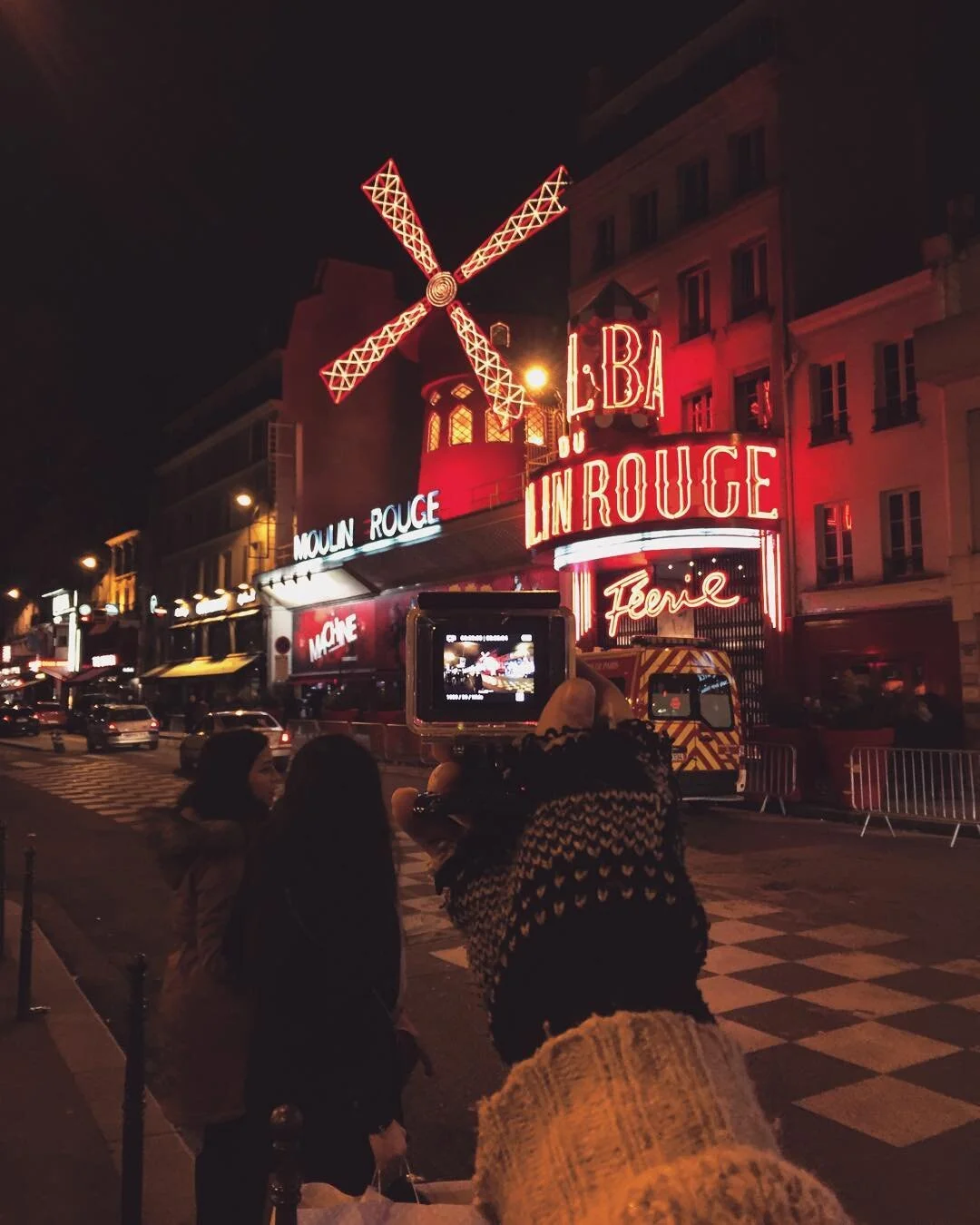
NIGHT WALK INN PARìS:
This is the Moulin Rouge, the first electric powered building in the city, an historic entertainment institution that survived two world wars, a devastating fire in 1915 and several economic crises. A symbol of Paris bohemian era made up of dances & shows.
WALKING IN BOLOGNA:
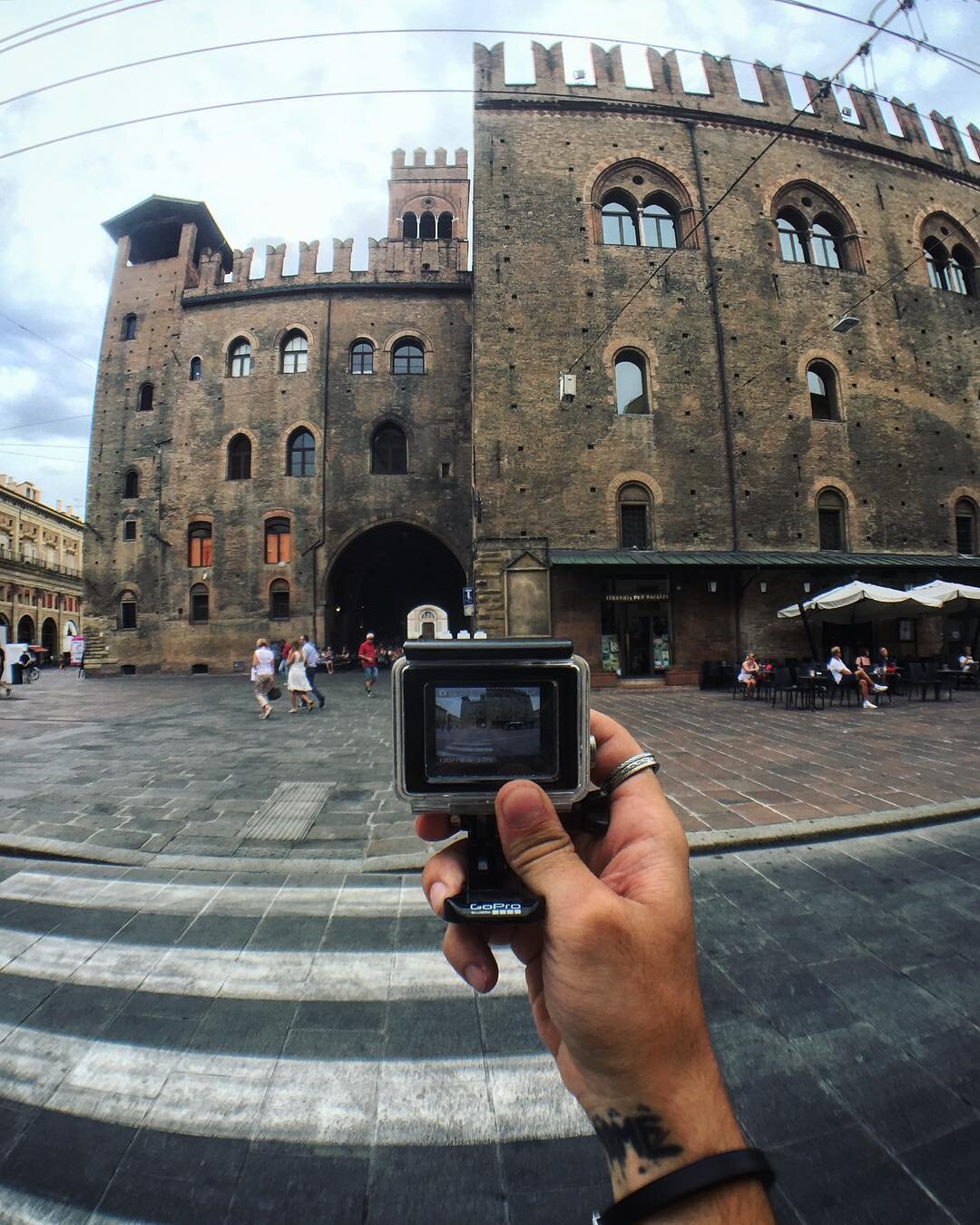
Sadly I do not have enough time in this city to do some en plain air painting, but i am taking tons of pictures in order to have all kind of references to do some studio works about the architecture of this amazing place. Palazzo Re Enzo was built between 1244-46 and it makes the perfect subject for a texture study, just look at those tones and shapes! Lovely.
WHILE IN FIRENZE:
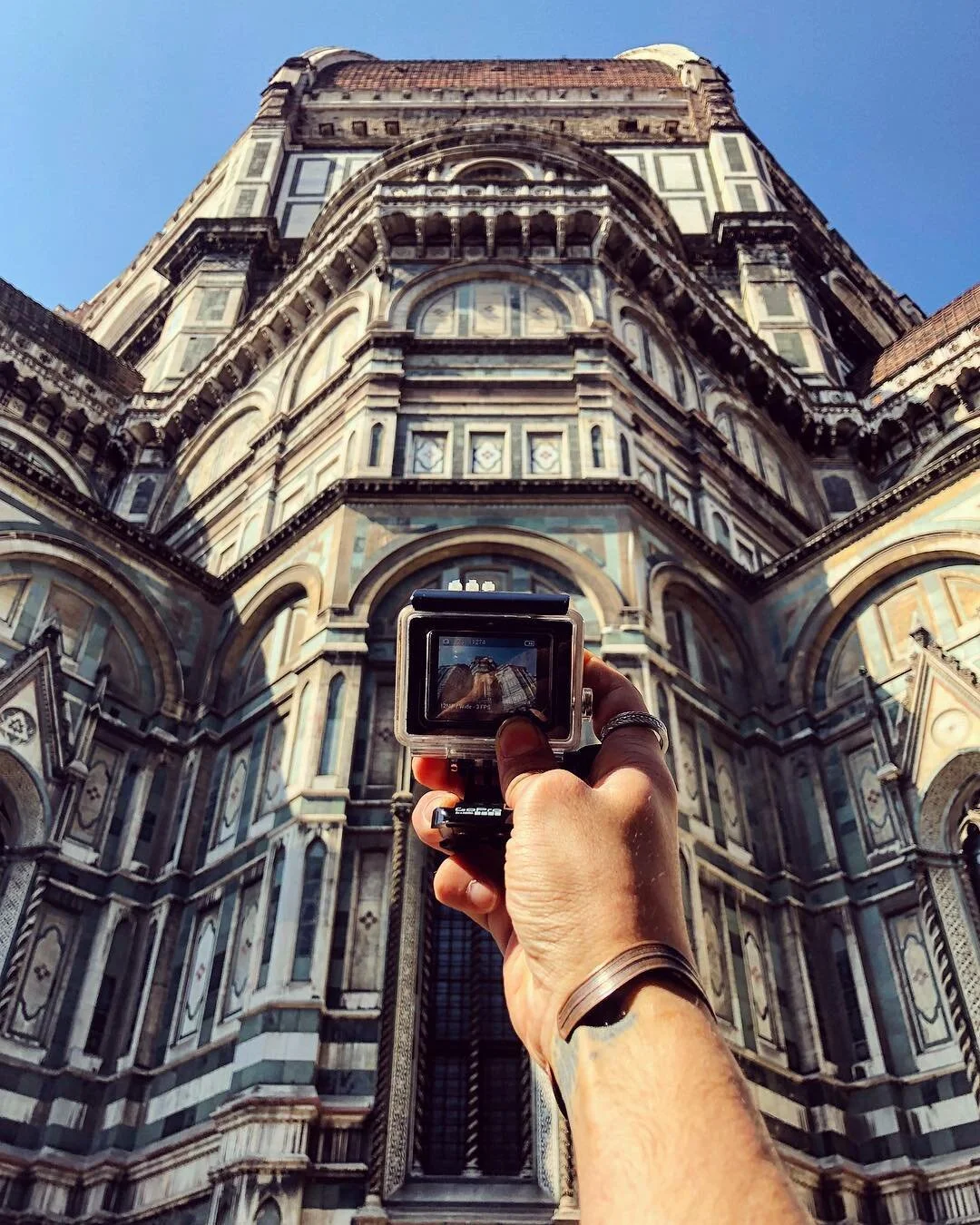
The cathedral of Santa Maria Del Fiore is the third largest cathedral in the world, but in the 15th century (when it was completed) it was the largest cathedral in Europe. The numbers? It is 153 meters long, 90 meters wide at the crossing, and 90 meters high from the floor to the bottom of the dome. Thick beauty!
WHILE IN PARìS:
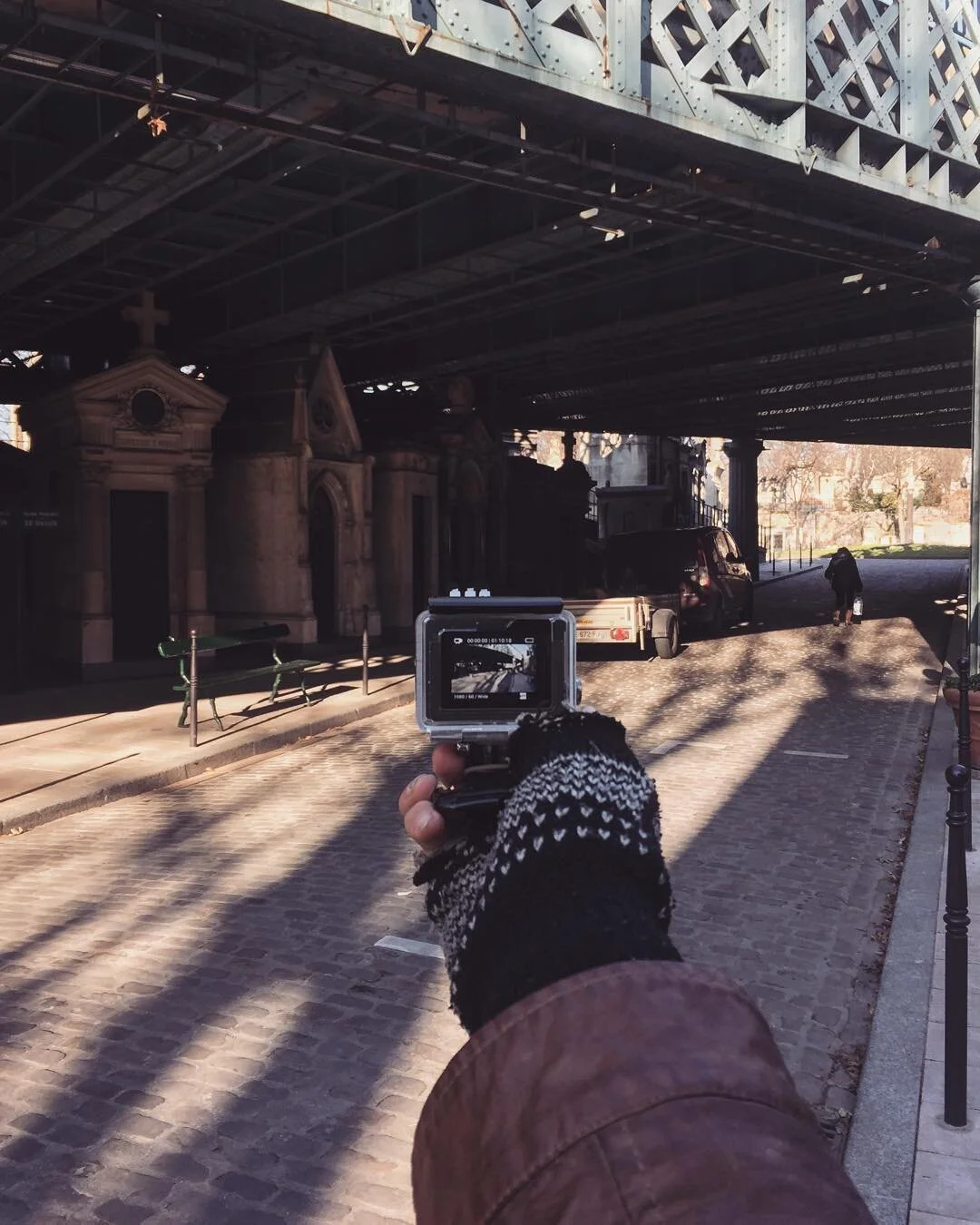
The cimetière du Nord, also known as Montmartre Cemetery, exist since the 1824 and is located in an abandoned gypsum quarry in the 18th arrondissement. With around 20.000 graves scattered over 11 hectares this is the resting place of many artists, authors, architects, actors, politicians & many other amazing people making it one of the most interesting place to stroll around with a history book, or just with the Internet..
WALIKING IN KRAKOW:
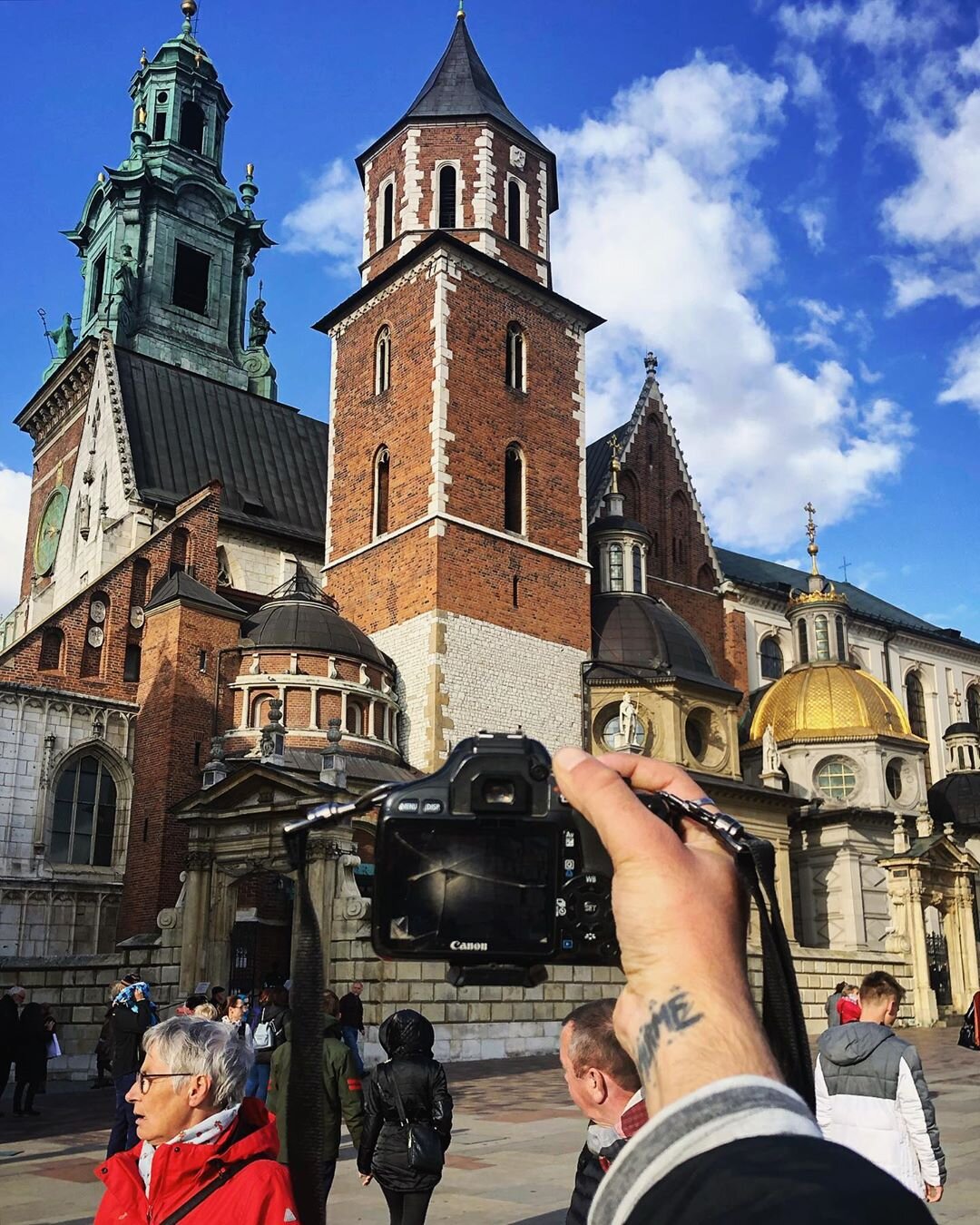
The Wawel Castle is one of the largest castle in Poland. Built at the behest of King Casimir III the Great the castle represents nearly all European architectural styles of medieval, renaissance and baroque periods. The Renaissance palace you see today dates from the 16th century but an original smaller residence was built in the early 11th century by King Bolesław I Chrobry, years later Kazimierz III Wielki (Casimir III the Great) turned it into a Gothic castle, but when it burned down in 1499 Zygmunt I Stary (Sigismund I the Old) commissioned a new residence with a more Italian-inspired design.:
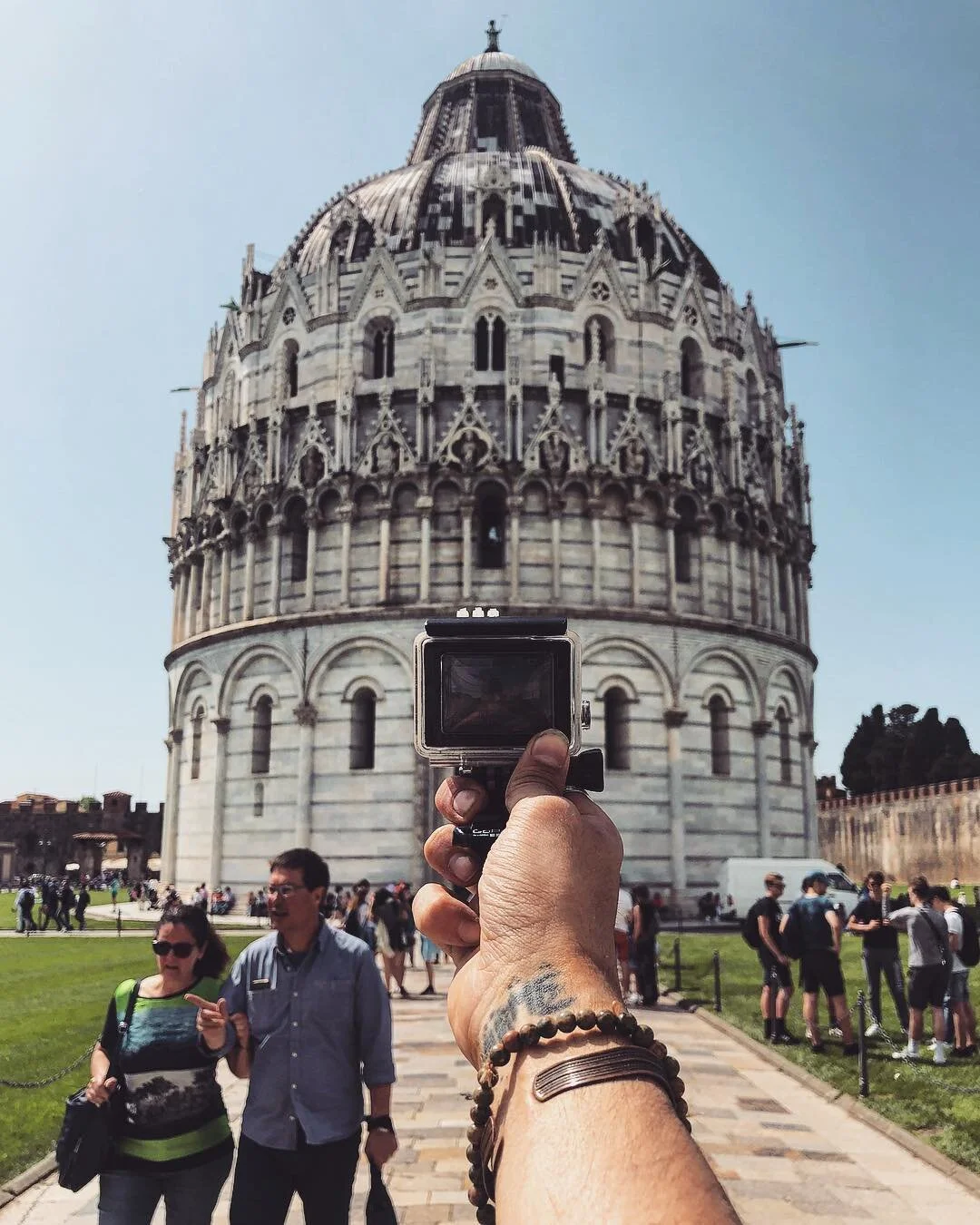
THE LARGEST IN ITALY:
The baptistery of San Giovanni is the largest baptistery in Italy, with 54.8 meters in hight, 34.1 meters in diameter and a circumference of 107.2 meters. Constructions started in 1153 by the architect Diotisalvi and it was completed in 1363 with the help of different master builders like the Pisano’s family.
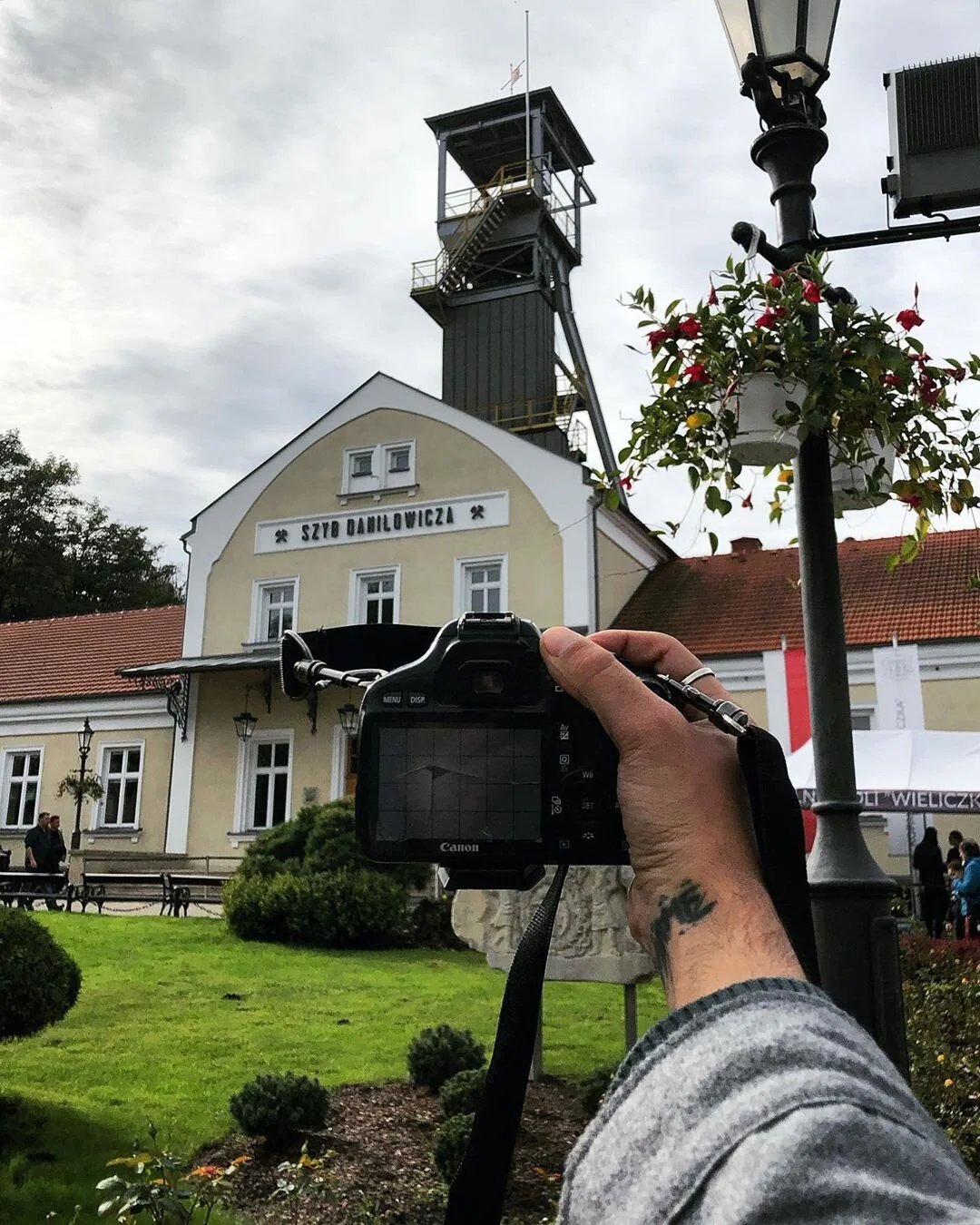
INCREDIBLE SALT MINES:
Welcome to the historic Wieliczka Salt Mines! Located about ten kilometres outside the city of Kraków, this Unesco world heritage site is one of the most interesting mines in the world and a mandatory stop to anyone who's visiting the Kings city. Wanna know why? Stay tuned and lets go underground first.
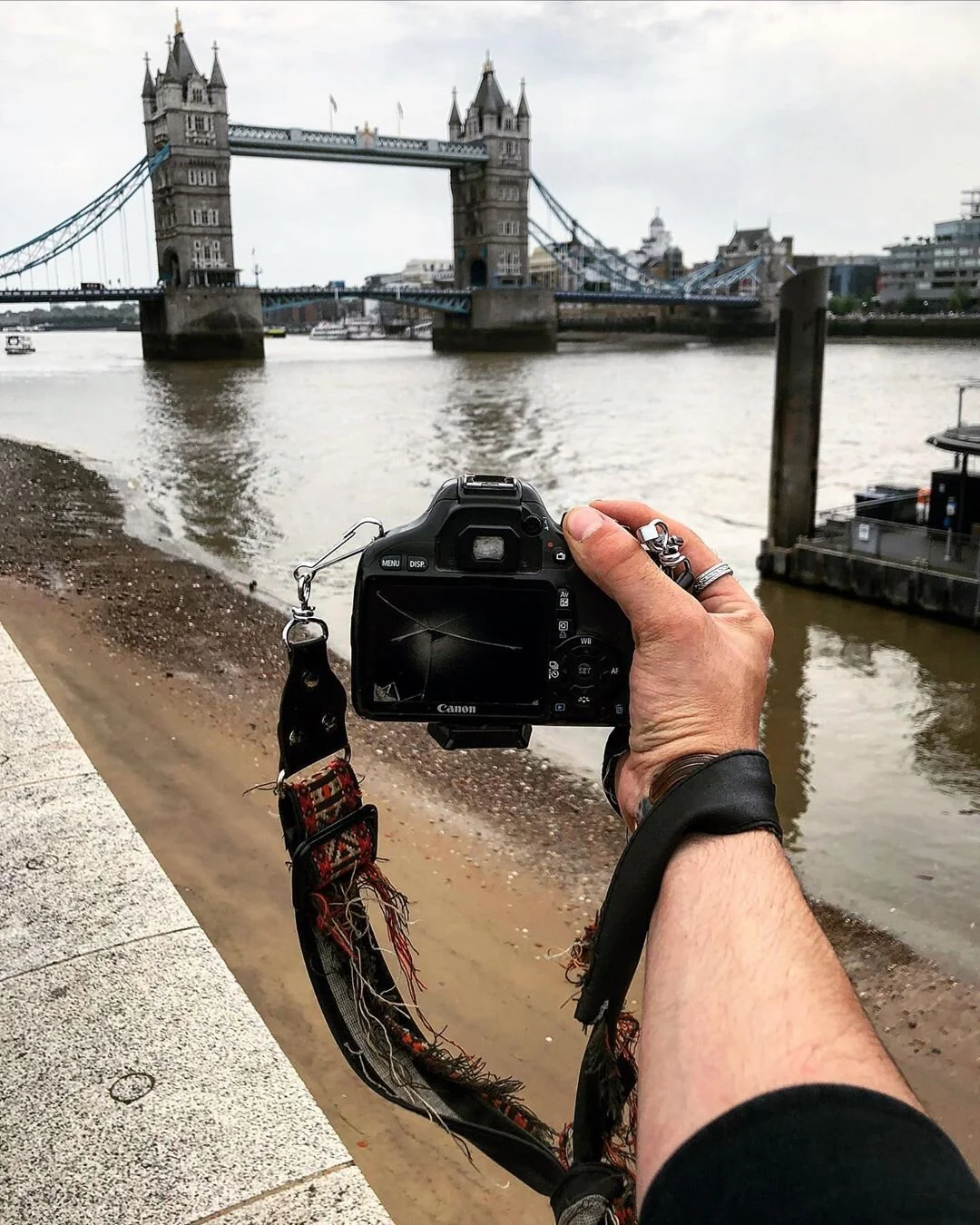
SOME BASIC FACTS:
Tower Bridge was officially opened in 1894 by the prince and princess of Wales, future King Edward VII and Alexandra of Denmark. The bridge is 240 meters in length with two towers each 65 meters high, built on piers. The central span of 61 meters between the towers is split into two equal bascules, which can be raised to an angle of 86 degrees to allow river traffic to pass underneath it. It took eight years to be completed with a cost of £1,184,000 at the time, which is the equivalent of £152,616,515.39 of 2019
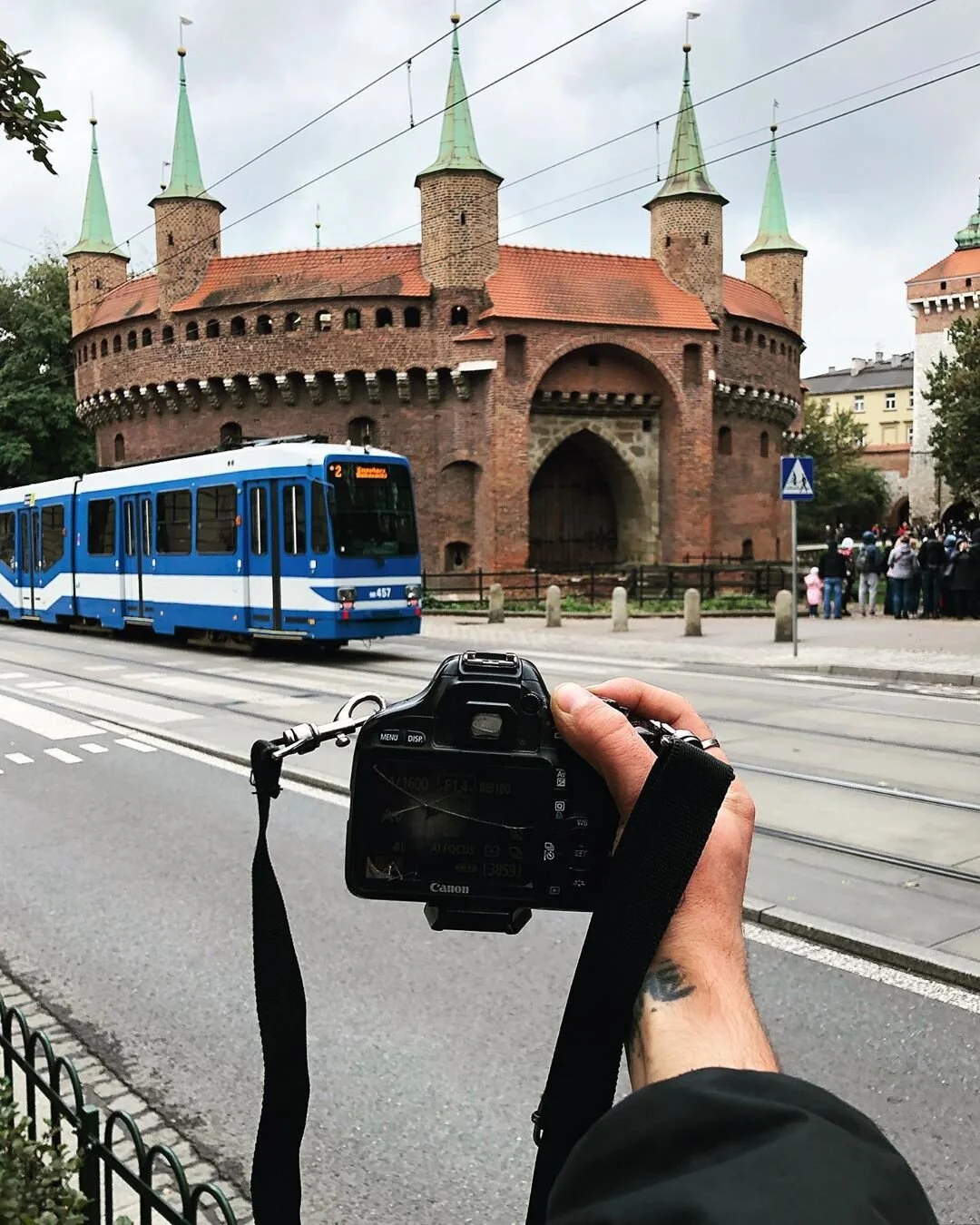
WHILE IN KRAKOW:
The Kraków barbican is one of the best preserved elements of the complex network of fortifications and defensive barriers that once encircled the royal city of Kraków. It is a moated cylindrical brick structure with an inner courtyard of almost 25 meters in diameter, seven turret and its 3-meter-thick walls hold 130 embrasures. The barbican was built around 1498 and was originally linked to the city walls by a covered passageway that led through St. Florian's Gate and served as a checkpoint for all who entered the royal city.
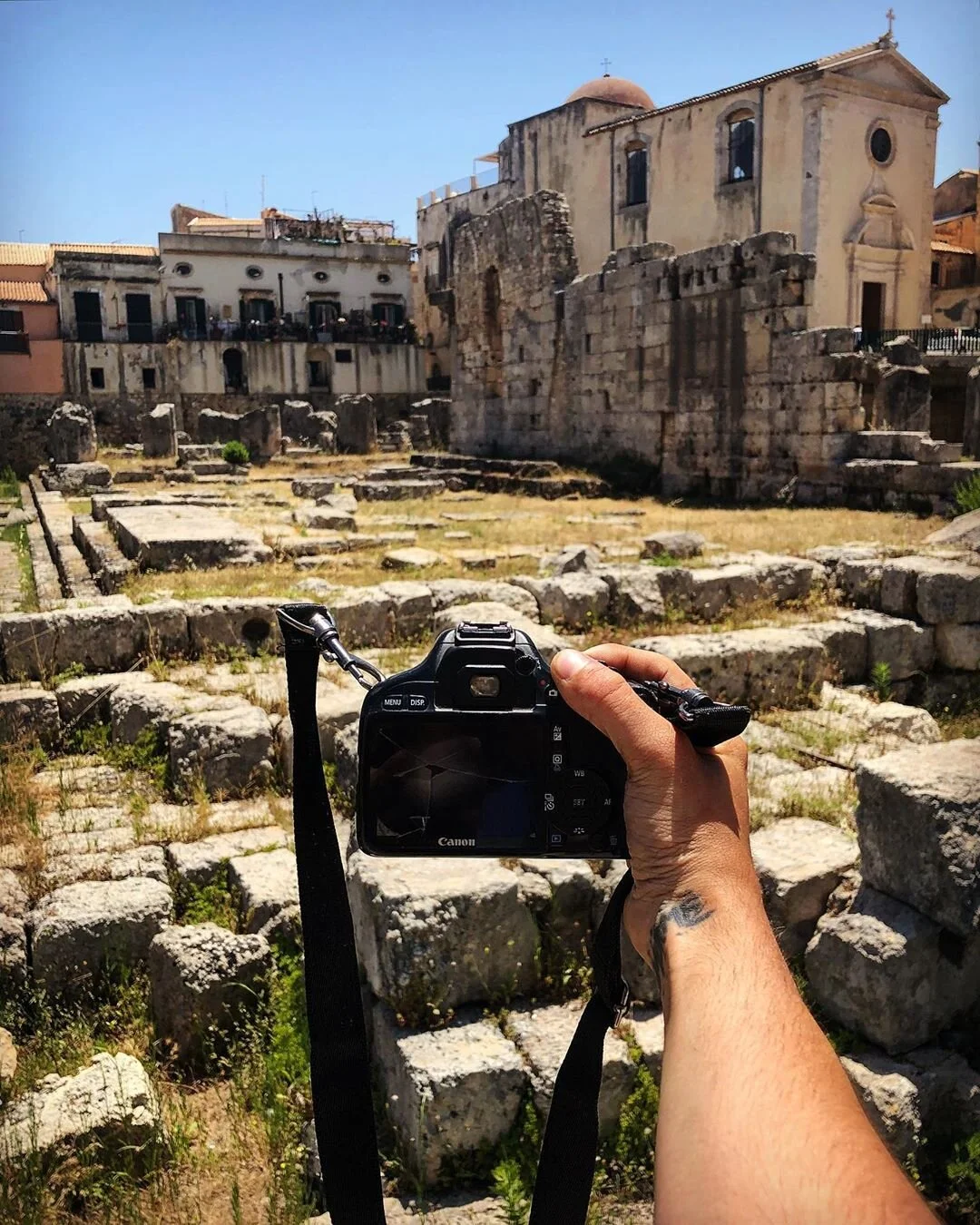
GREEK HISTORY:
Here we can see the remains of one of the oldest Doric temple of Magna Graecia available to us, the Temple of Apollo, dating back to the 6th century B.C. The temple underwent several transformations: closed during the persecution of pagans in the late Roman Empire, it was a Byzantine church, and then an Islamic mosque during the Emirate of Sicily. Later it was restored to its previous purpose, becoming the Norman Church of the Saviour, which was then incorporated into a 16th-century Spanish barracks and into private houses, though some architectural elements remained visible . In 1860, however, preliminary evidence of the ancient temple was found hiding in what was then the barracks, and between 1938 and 1942 the remains of the temple were freed from the modern additions and at last excavated by Paolo Orsi and his crew.
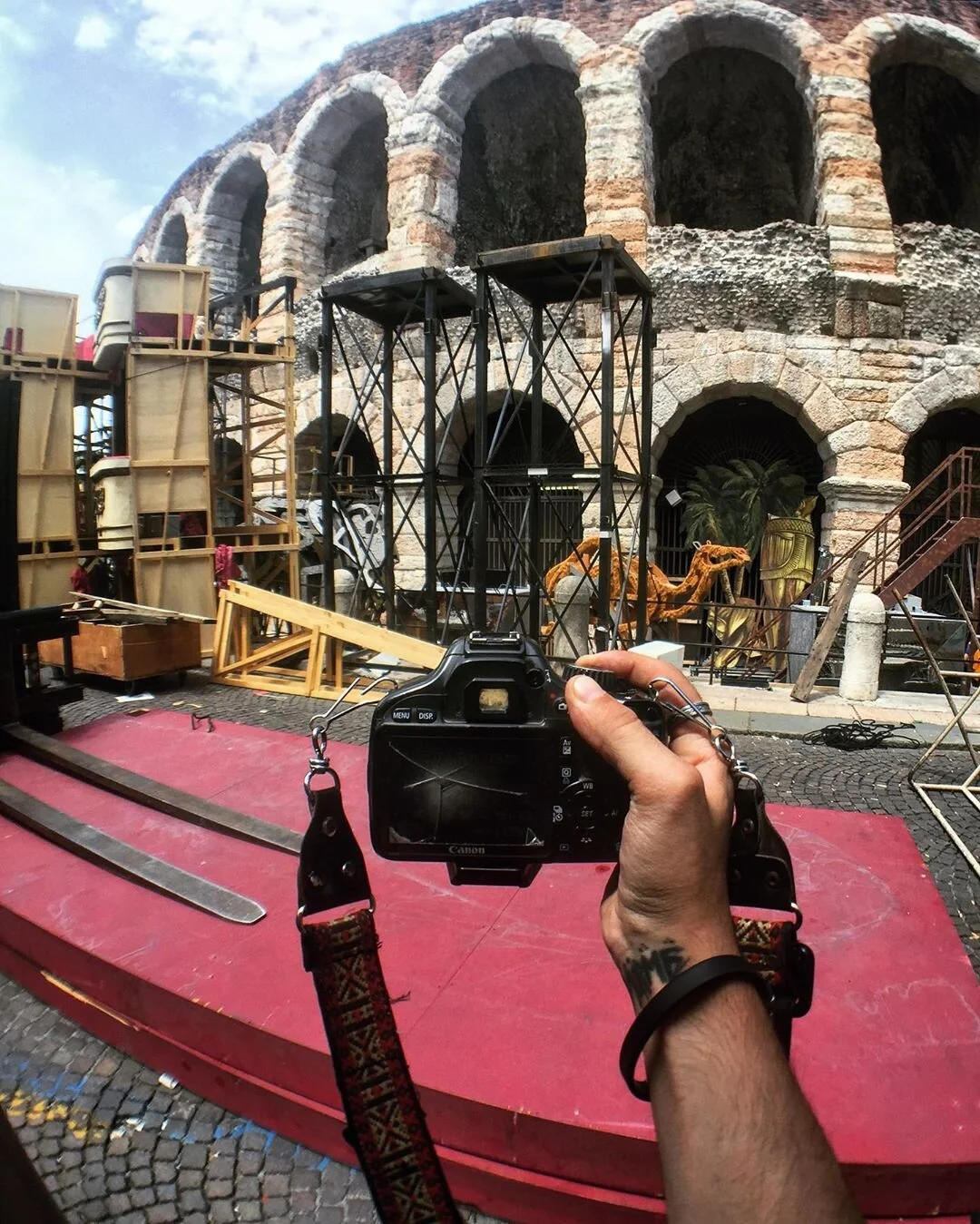
L’ARENA DI VERONA:
Scenographic items being delivered into the arena in order to set up a new show in one of the best preserved Roman amphitheater of the world. Here 15.000 people can be safely enjoy the great acoustics of the arena during the famous opera venue, which began during the Renaissance, or to attend one of the many concert being arranged in this charming location, like Pink Floyd, Bruce Springsteen, Deep Purple, Paul McCartney, The Who, Whitney Houston, Björk, Dire Straits, Peter Gabriel, Kiss & much more.
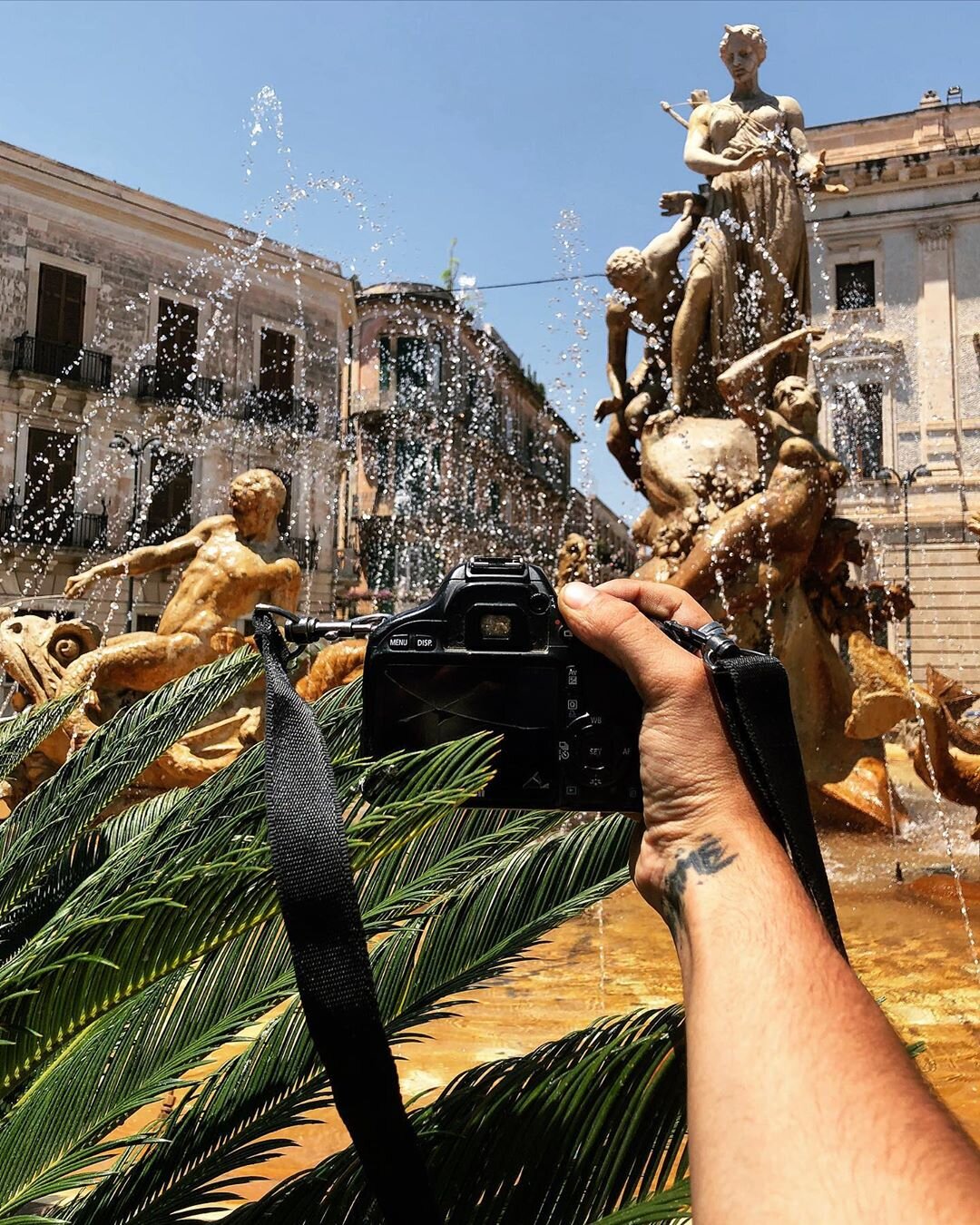
WALKING IN SIRACUSA:
The fountain of Diana was built by Giulio Moschetti, in collaboration with his son Mario, after the excellent result obtained with the creation of the Proserpina fountain in Catania a couple of years earlier. In 1906 the city council commissioned them the new fountain after the presentation of the preparatory sketch and it will take ten months to finish it. Mostly built in reinforced concrete the entire project costed 19,000 lira’s at the time. (Less then today’s 10€ )
MONTECASSINO TEST:
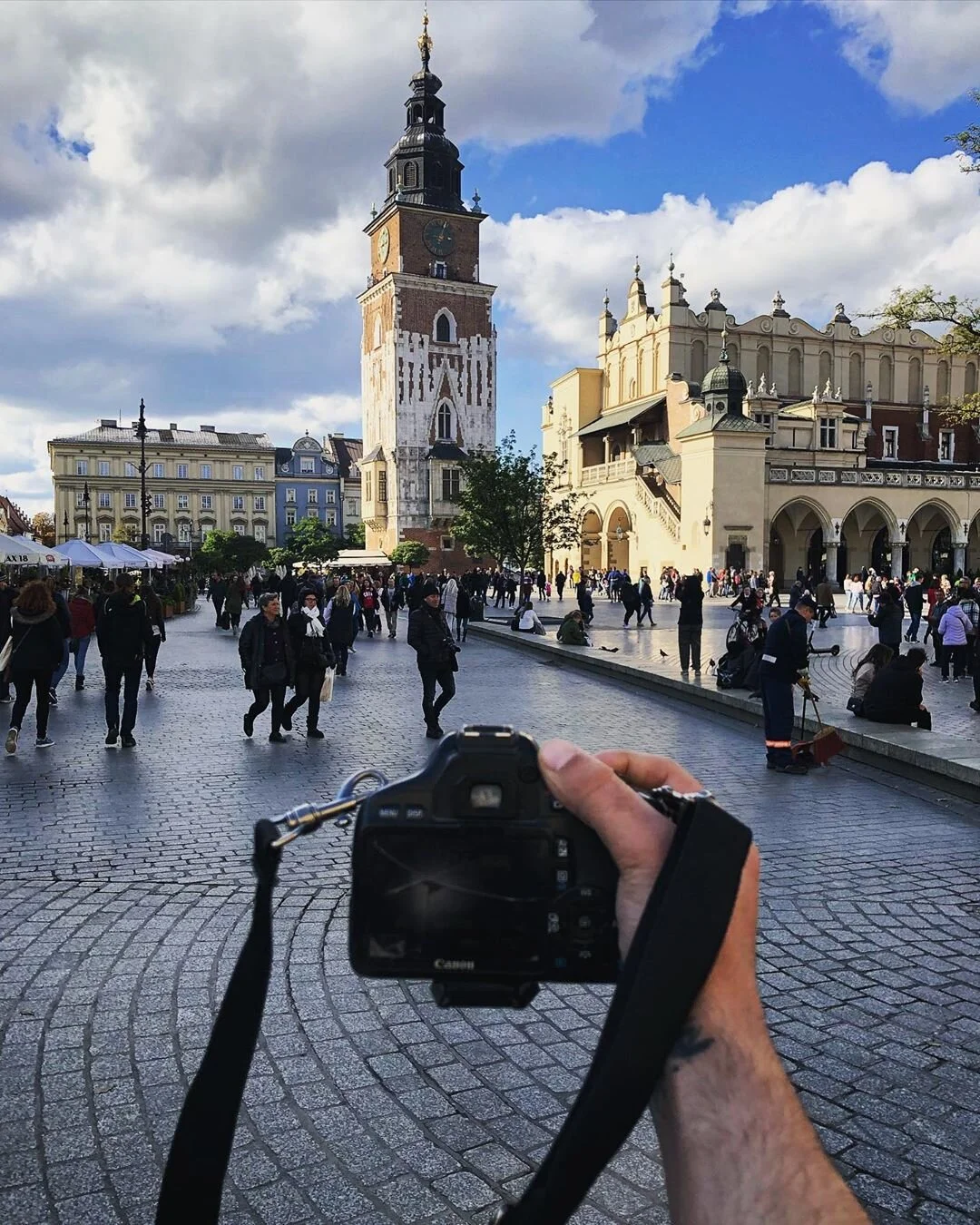
THE LARGEST MEDIEVAL PLAZA:
The main Market Square in Kraków is just incredibly interesting! It is the largest city plaza of the Medieval world, Europe biggest market square, the first Unesco heritage site in Poland and one of the most architecturally pleasing location in the city. The center stage is the Cloth Hall (Sukiennice in Polish) built in the 14th century and was practically one of the first shopping mall in the world.
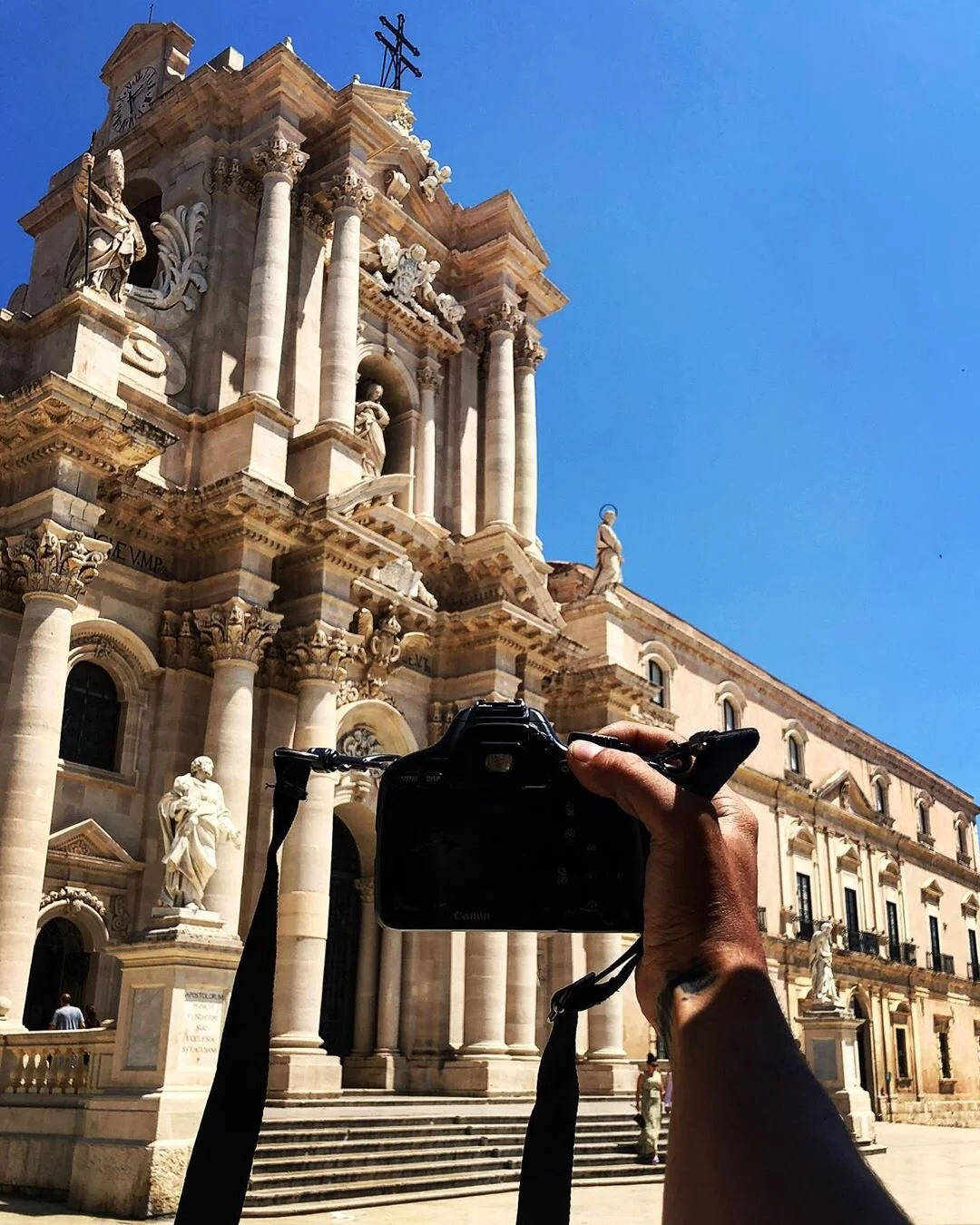
IL DUOMO DI SIRACISA:
The great Greek Temple of Athena was built here in the 5th century BC, the present cathedral was constructed by Saint Bishop Zosimo of Syracuse in the 7th century, and the battered Doric columns of the original temple were incorporated in the walls of the current church. The building was converted into a mosque in 878, then converted back when Norman Roger I of Sicily retook the city in 1085. A few hundred years later, in 1693, Sicily was shaken by a terrible earthquake and the cathedral was damaged and the facade redesigned by architect Andrea Palma between 1725 and 1753. However, the origins of a temple on this site date back to prehistory.
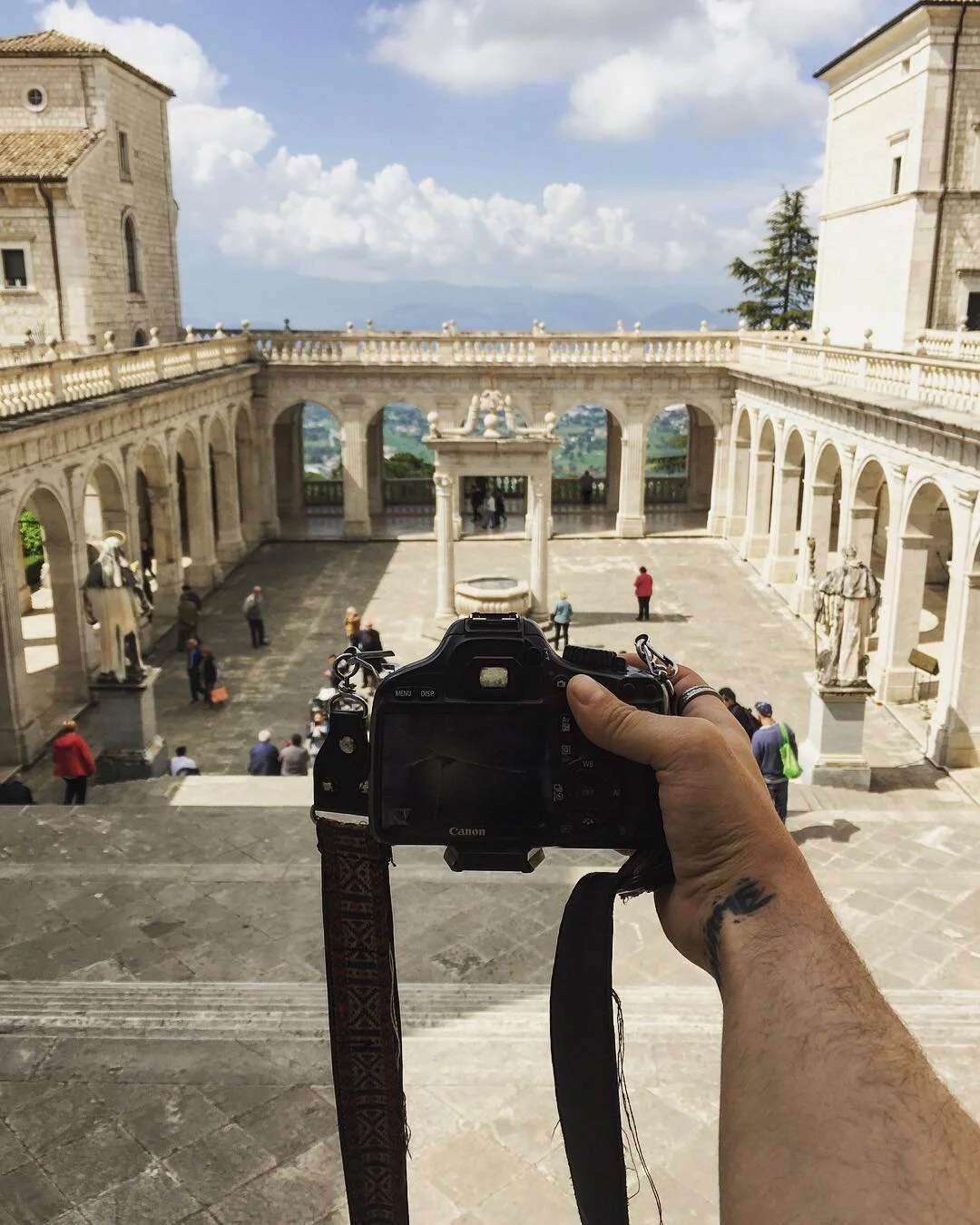
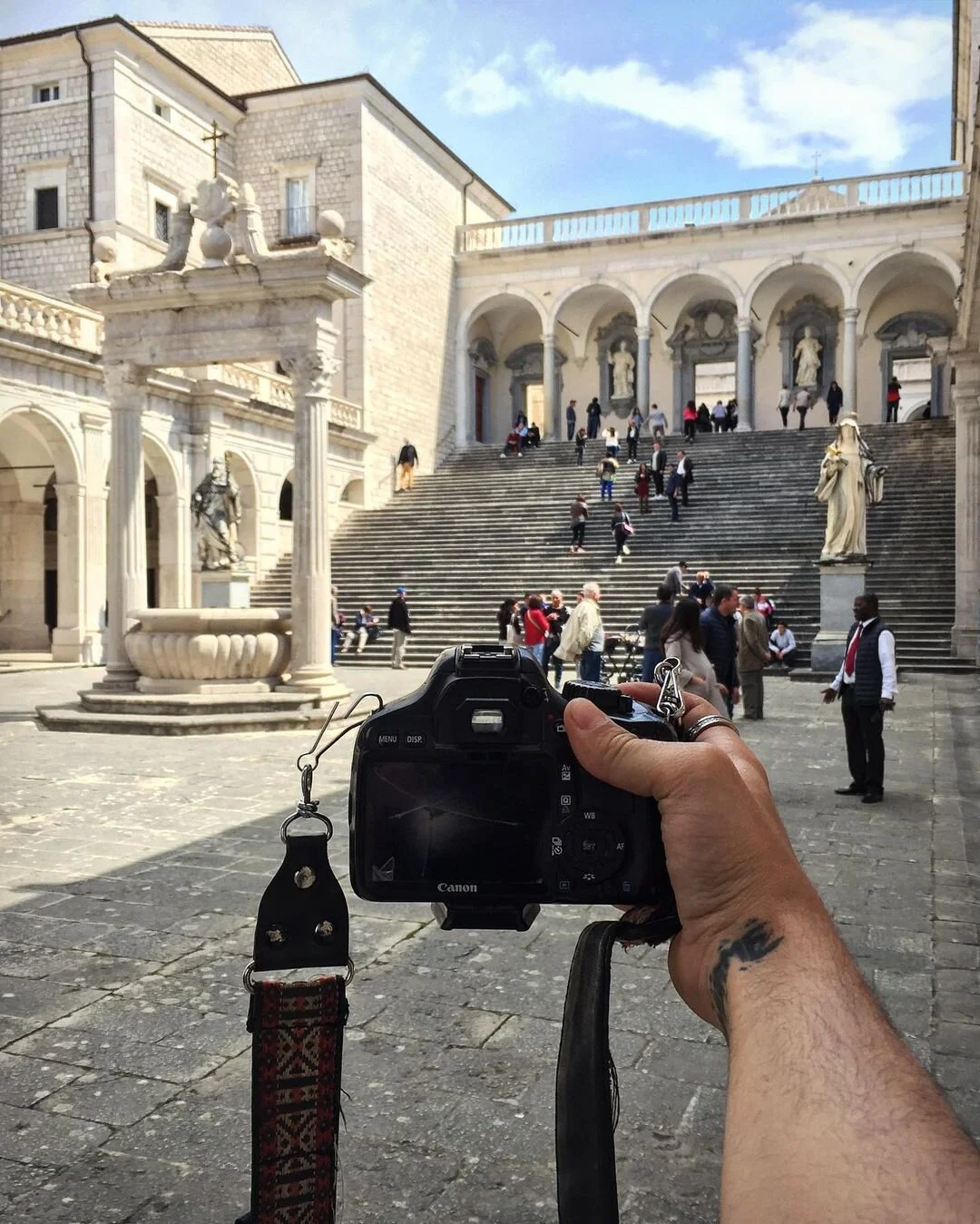
ABBAZIA DI MONTECASSINO:
Welcome in the Cloister of Paradise. This lovely Renaissance courtyard is 40 meters long and 30 meters wide, at the center there is an octagonal water cistern with two Corinthian columns that support the decorated trabeation, in the back end there is a covered porch where you can walk along the balcony and enjoy the amazing view of the Liri's valley and the Polish cemetery, on the sides there are the statues of San Benedetto and sister Santa Scolastica, and on the top of the staircase there is an anti-porch made of oriental granite columns and several niches made of marble bardiglio. An interesting place designed by Donato Bramante in 1595.
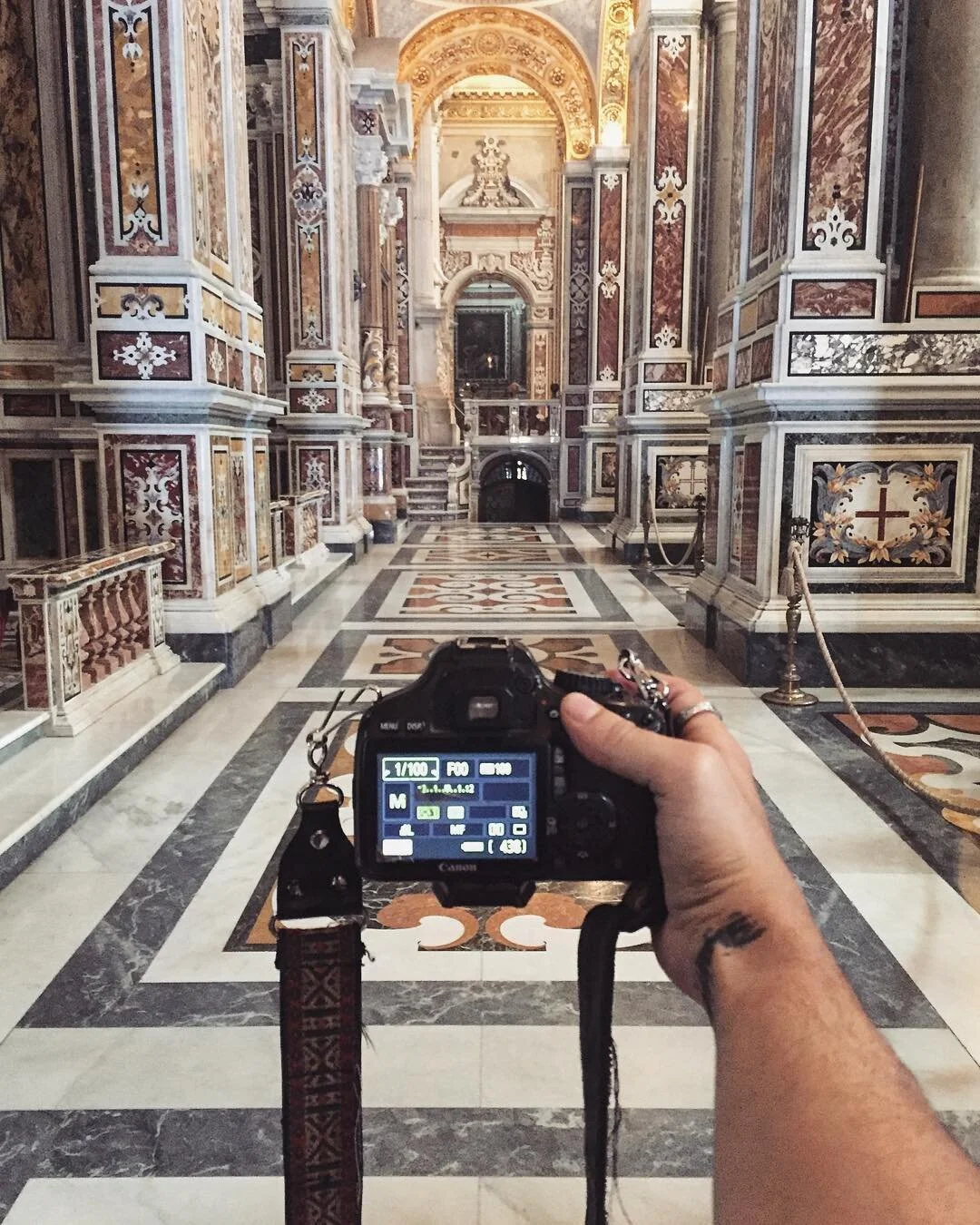
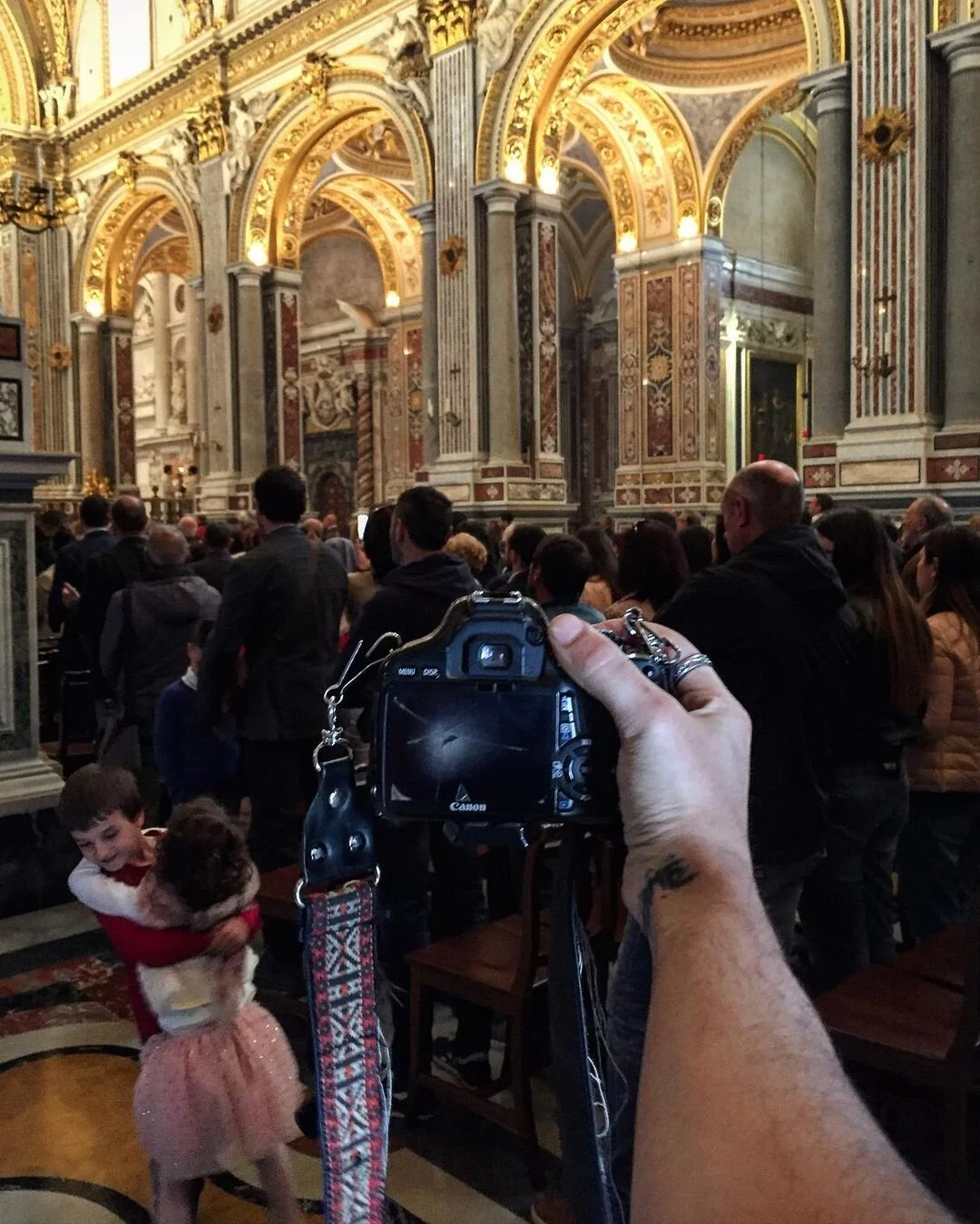
THE INTERIOR:
Enjoying some marble porn while learning about the reconstruction of this room after the bombings of World War II: The Sicilian Diaspro was extracted from the sea bottom of Trapani, the Spanish Broccatello and the agate were provided by the institute of hard stones of Firenze in exchange of some of that lovely red Diaspro, a small part of the amethyst used for the central altar was supplied by the Brazilian Benedictine community, while the rest of it was extracted back from the rubble.